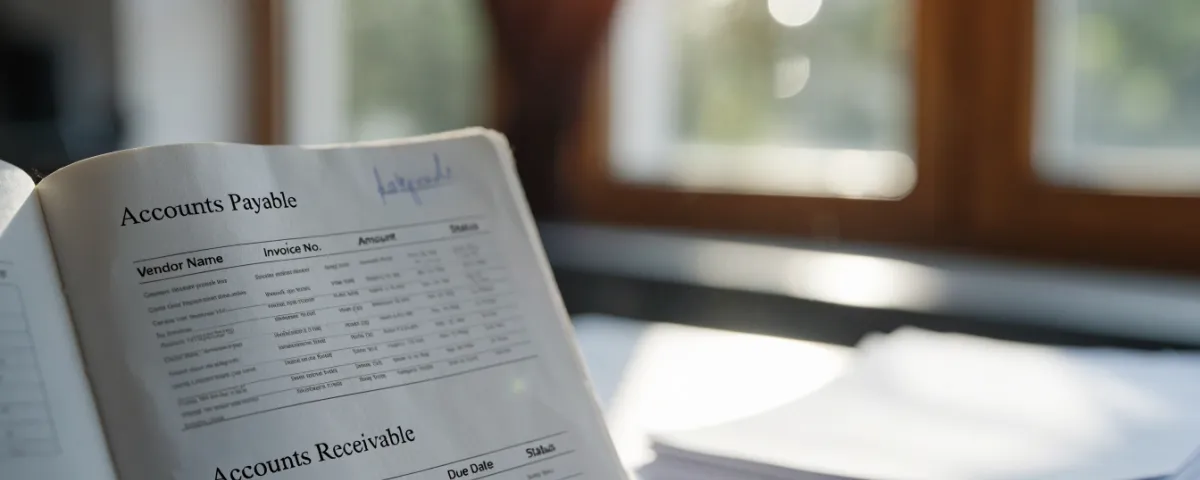
Accounts Payable vs Receivable
Accounts payable is money a business owes suppliers for goods or services already received but not yet paid, recorded as a current liability. Accounts receivable is money customers owe the business for goods or services already delivered, recorded as a current asset. Payables are outgoing cash; receivables are incoming cash.
Table of Contents
- Understanding Accounts Payable as Money Out
- Understanding Accounts Receivable as Money In
- Accounts Payable vs Accounts Receivable
- Where Payable and Receivable Sit on Your Balance Sheet
- How Uncollected Receivables Hurt Your Business Cash Flow
- What Happens When You Delay Your Accounts Payable
- Best Software Tools for Managing Payable and Receivable Workflows
- Simple Strategies to Streamline Both Invoicing and Bill Payments
Understanding Accounts Payable as Money Out
Accounts payable represents the money a business owes to its suppliers and vendors for goods and services it has already received but not yet paid for. When a company purchases inventory, raw materials, office supplies, or professional services on credit, the amount owed is recorded under accounts payable. Common examples include unpaid supplier invoices for stock delivered earlier in the month, outstanding utility bills, consulting fees billed net 30, and pending purchase orders that have been fulfilled but not yet settled. Each of these obligations sits on the company’s books as a promise to pay in the near future, typically within 30 to 90 days depending on the negotiated terms.
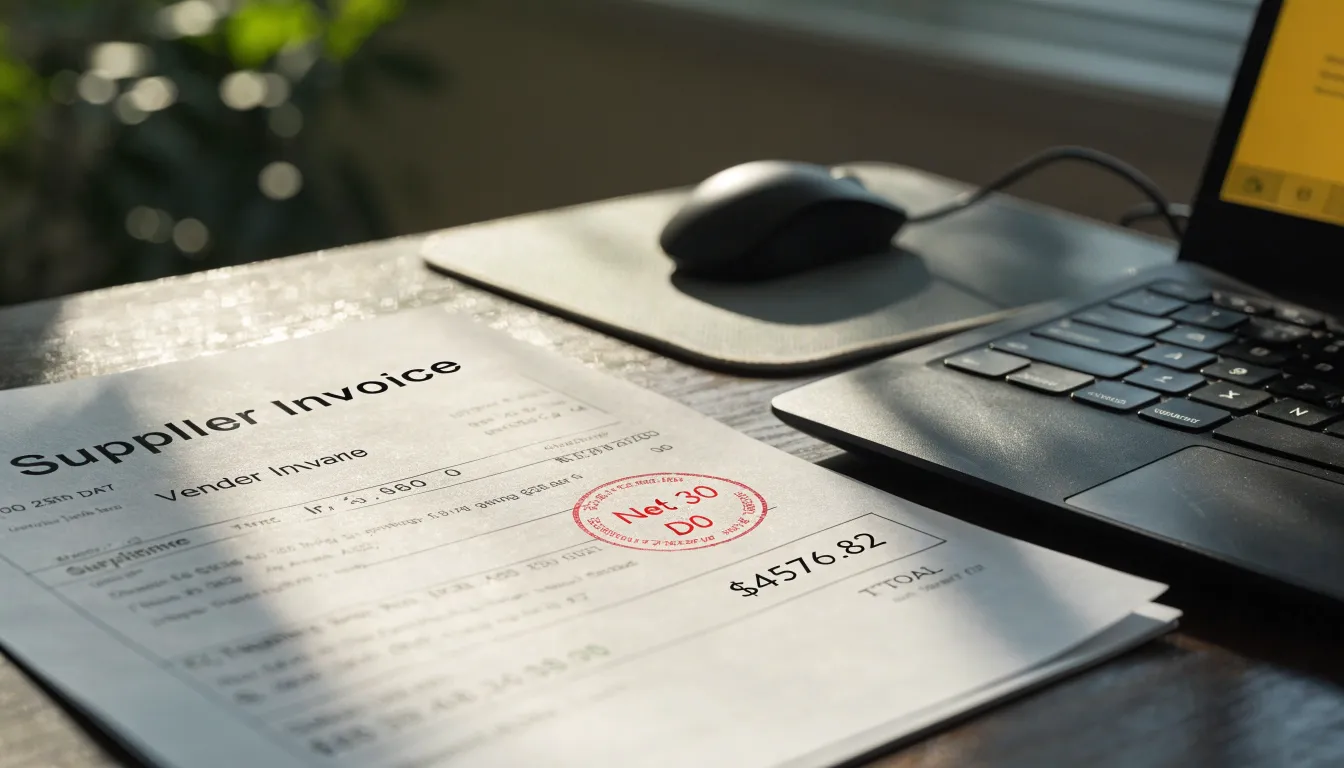
This is why accounts payable is classified as a liability on the balance sheet. A liability, in accounting terms, is any obligation a business must settle through an outflow of cash, goods, or services in the future. Because accounts payable reflects money the business must pay out, it reduces the company’s net worth and represents a claim against its assets. It sits under current liabilities, the category reserved for obligations due within one operating cycle, usually twelve months. Recording these amounts accurately matters because the balance sheet must show a true picture of what the company owns against what it owes.
The money-out view of accounts payable runs through the entire cash flow cycle. Every invoice logged creates a future payment that will eventually leave the company’s bank account. Managing these obligations well means tracking due dates, avoiding late fees, and maintaining good relationships with the suppliers the business depends on. A company that keeps its payables organized can plan its cash position with confidence, knowing exactly when each payment falls due. Accounts payable also plays a role in working capital: extending payment terms lets a business hold onto cash longer, while paying early may earn discounts. For anyone reading financial statements, the accounts payable balance offers a clear signal of how much short-term cash the business has committed to outgoing payments and how well it manages the money flowing out the door.
Understanding Accounts Receivable as Money In
Accounts receivable represents the money your customers owe your business for goods or services you have already delivered. When you send an invoice to a client and allow them a window of time to pay, such as 30 or 60 days, that unpaid balance sits on your books as a receivable until the customer settles it. Common examples include a consulting firm that has completed a project and issued an invoice with net-30 terms, a manufacturer that has shipped an order to a retailer who pays on credit, or a software company that bills subscribers at the end of each month. In each case, the work is finished and the revenue has been earned, but the cash has yet to arrive.
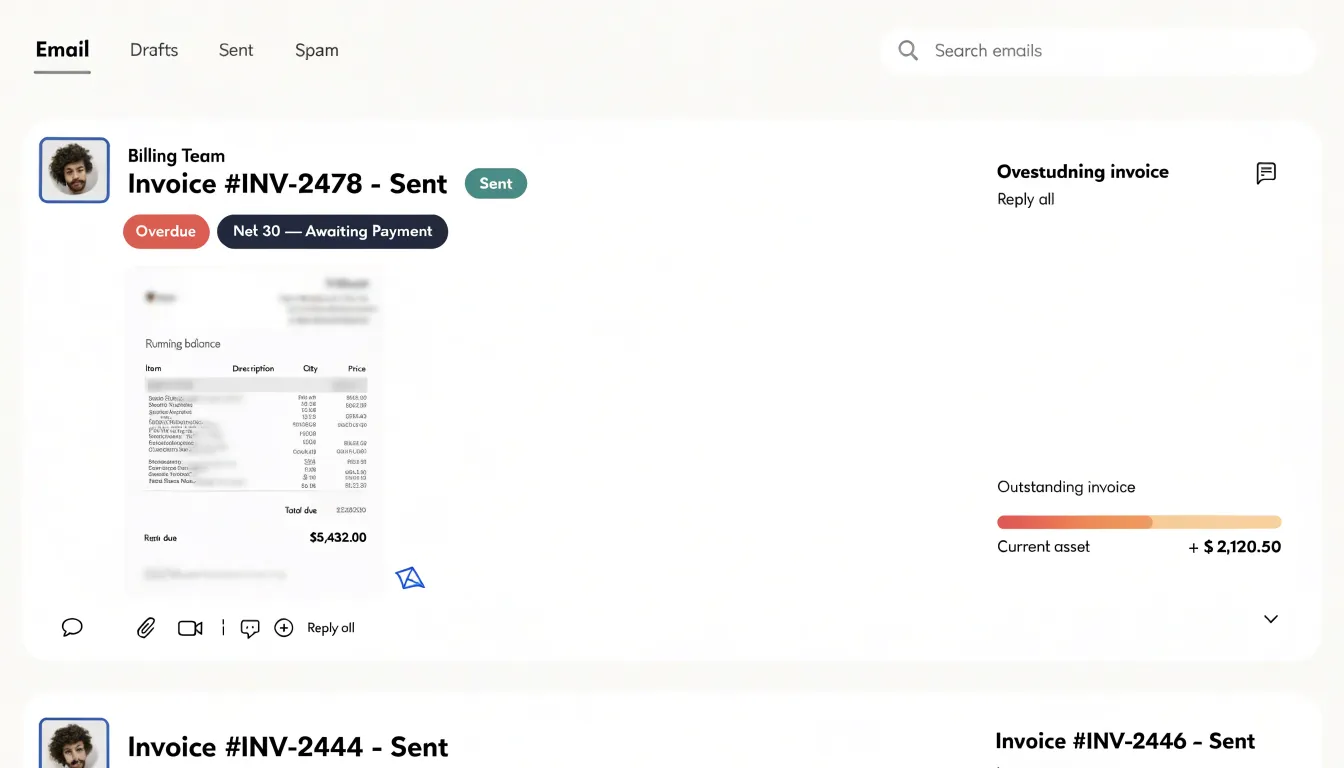
Because the money is owed to you and expected to be collected, accounts receivable is classified as a current asset on the balance sheet. An asset is any resource of value that your business owns or is entitled to receive, and a receivable fits that description precisely: it represents a legal claim on your customers backed by an invoice and the terms of your agreement. The current designation reflects the expectation that the balance will convert into cash within a normal operating cycle, typically twelve months. This matters for anyone reading your financial statements, because receivables count toward the resources available to cover short-term obligations. A healthy receivables balance can support your standing with lenders and suppliers even before the cash lands in your bank account.
The phrase money in captures the essential character of accounts receivable. Each outstanding invoice is a future inflow, a payment already earned and merely awaiting collection. Tracking these balances carefully lets you see how much cash is scheduled to come through the door, which customers are current on their obligations, and where follow-up may be needed. Aging reports, which sort receivables by how long they have been outstanding, give you a clear picture of which invoices are moving toward payment and which are lingering. Managing this side of the ledger well means invoicing promptly, setting clear payment terms, and following up on overdue balances, so that the money you have earned actually reaches your account on schedule.
Accounts Payable vs Accounts Receivable
Accounts payable and accounts receivable represent two sides of the same transaction, yet they differ fundamentally across several dimensions. A side-by-side comparison clarifies these distinctions.
First, consider who owes whom. Accounts payable arises when a company purchases goods or services on credit from a supplier. The company is the buyer and owes money to the supplier. Accounts receivable arises when a company sells goods or services on credit to a customer. The company is the seller and is owed money by the customer. In essence, payables are obligations to pay, while receivables are rights to receive.
Second, balance sheet classification differs. Accounts payable is a current liability, reflecting the company’s obligation to pay within a year. Accounts receivable is a current asset, representing the company’s right to collect cash within a year. This classification affects key financial ratios and the company’s working capital position.
Third, the impact on cash flow diverges. Accounts payable represents an outflow of cash in the future when the company pays its suppliers. Until then, it preserves cash. Accounts receivable represents an inflow of cash when customers pay. Until then, it ties up cash. Managing the timing of these flows is critical for liquidity.
Finally, typical payment terms vary. Accounts payable terms are set by suppliers and often range from 30 to 90 days, sometimes with early payment discounts. Accounts receivable terms are set by the company and may include discounts for early payment or penalties for late payment. The terms influence the cash conversion cycle.
Understanding these core differences helps businesses manage working capital effectively. By negotiating favorable payables terms and monitoring receivables closely, a company can optimize its cash position and reduce financial risk.
Where Payable and Receivable Sit on Your Balance Sheet
Accounts payable and accounts receivable occupy opposite sides of the balance sheet, and their placement tells you a great deal about how a business manages its cash in the near term. Accounts payable sits under current liabilities, the section that lists obligations a company expects to settle within a year. When a business buys inventory, supplies, or services on credit, the amount owed to the supplier is recorded here until the invoice is paid. Accounts receivable appears under current assets, the section that lists resources expected to convert into cash within a year. When a business sells goods or services to a customer on credit, the amount the customer owes is recorded here until payment arrives.
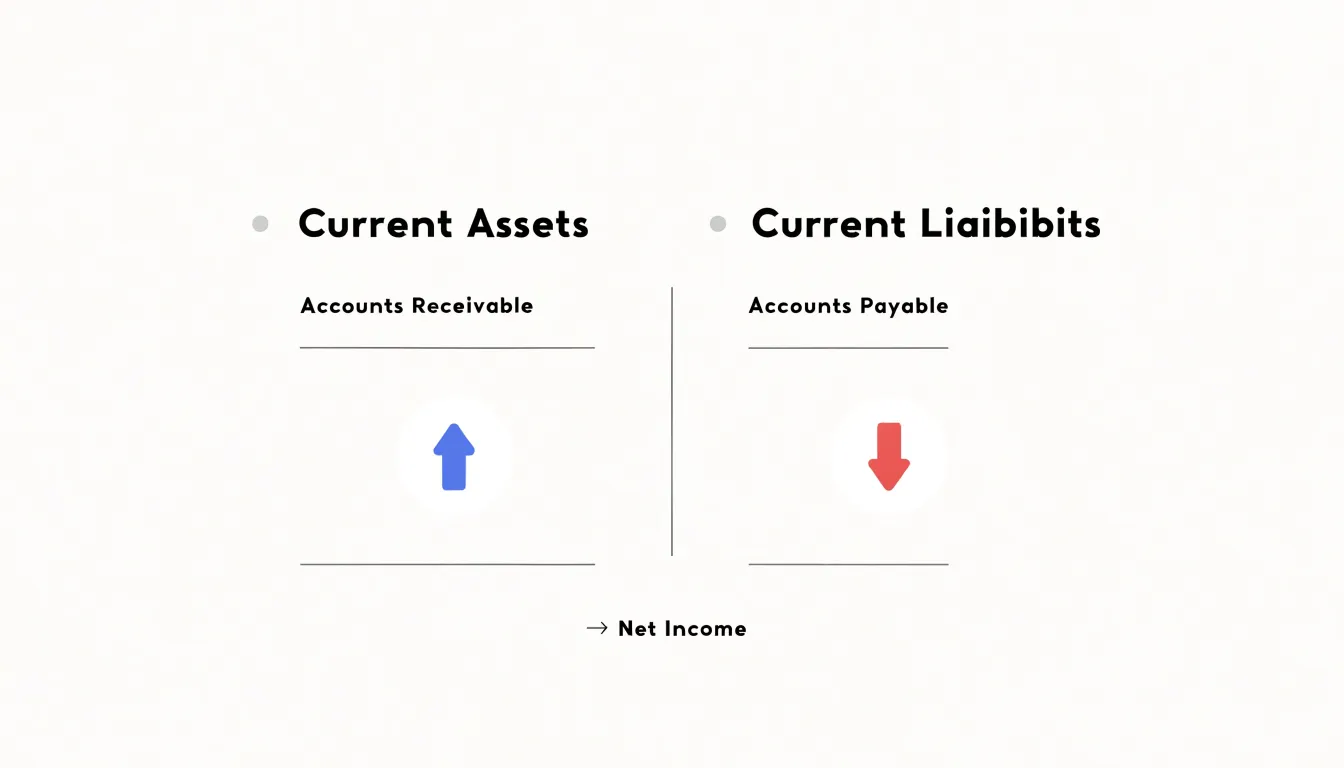
This arrangement means every credit transaction creates a matching pair of entries on the balance sheet. A sale on credit increases accounts receivable and revenue, while a purchase on credit increases accounts payable and either inventory or an expense. The two figures sit in different sections because they represent different directions of cash flow: receivables are money coming in, payables are money going out.
The relationship between these two balances is central to assessing short-term financial health. Analysts often compare them directly to see how quickly a company collects what it is owed relative to how quickly it must pay what it owes. A company with substantial receivables and modest payables may be in a strong position, provided those receivables are collected on schedule. A company with large payables and small receivables may face pressure to find cash quickly when supplier invoices come due.
Both figures also feed into liquidity measures such as the current ratio and the quick ratio, which divide current assets by current liabilities. Because payables and receivables are usually among the largest items in those sections, their balances and their timing heavily influence whether a business appears able to meet its near-term obligations. Watching how these two lines move over several periods gives a clearer picture than any single snapshot, since growth in receivables alongside stagnant payables can signal collection problems, while rising payables alongside flat receivables can signal stretched cash flow.
How Uncollected Receivables Hurt Your Business Cash Flow
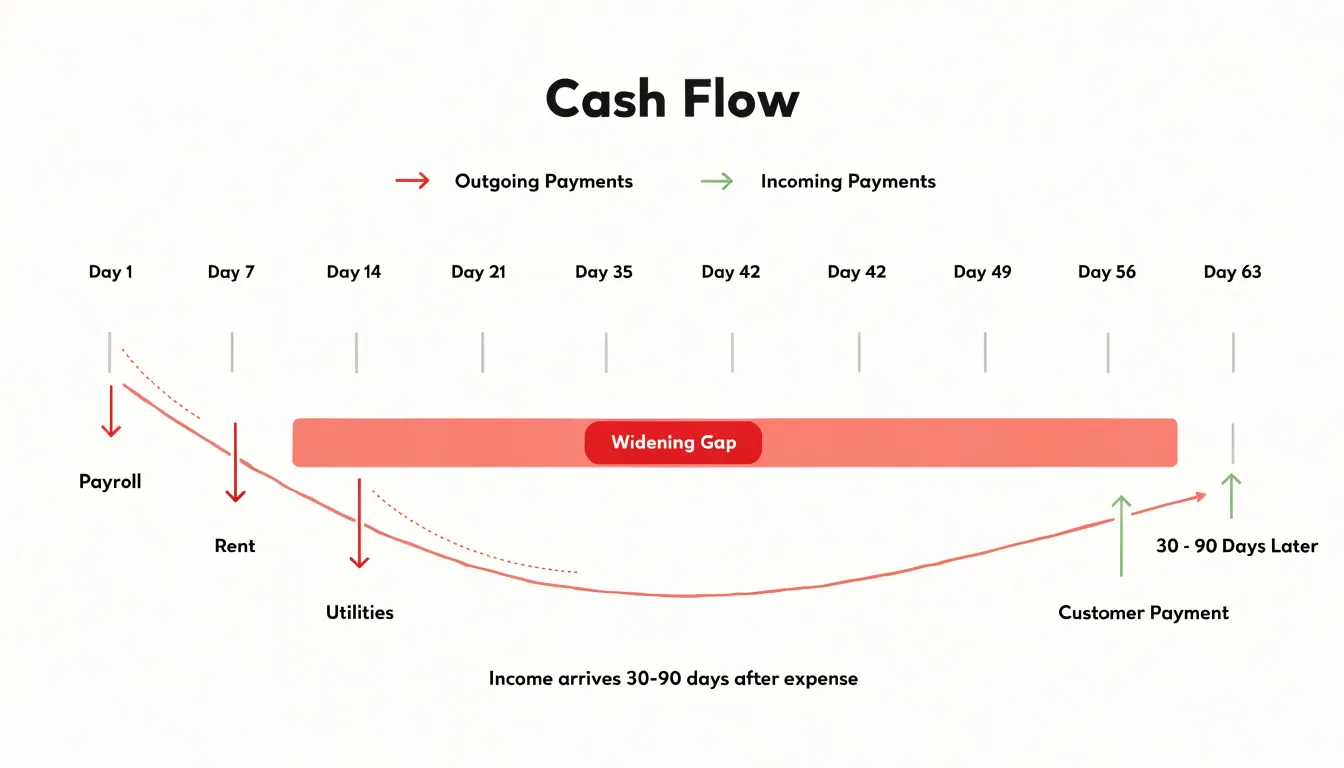
Uncollected receivables create a cash flow crunch because revenue is recorded on the books before the money actually arrives. When a customer receives goods or services and pays on credit terms, the business has already committed money to inventory, labor, and overhead, yet the cash from that sale may not appear for thirty, sixty, or ninety days. If a meaningful share of customers pay late or not at all, the gap between outgoing costs and incoming payments widens quickly. Payroll, rent, utilities, and loan installments do not pause to wait for customers, so the business must cover those obligations from whatever cash it has on hand or can raise on short notice. Even a profitable company on paper can find itself short of cash simply because its receivables are slow to convert.
One common response to this crunch is borrowing. A business may draw on a line of credit, take out a short-term loan, or use invoice factoring to bridge the gap. Each of these options carries interest, fees, or a discount on the invoice value, which erodes the margin the original sale was supposed to produce. A sale that looked profitable can become far less so once financing costs are added.
Another response is stretching payments to suppliers. When cash is tight, a business may delay paying its own vendors, which damages relationships and may trigger late fees, lost early-payment discounts, or suppliers refusing to extend credit in the future. Delaying supplier payments can also create a domino effect: those suppliers then face their own cash flow pressure, and the cycle continues down the chain.
The most serious risk is bad debt. Customers who never pay force the business to write off the receivable entirely, absorbing the full cost of the goods or services delivered with no offsetting revenue. Frequent write-offs shrink margins, reduce the funds available for growth, and may require raising prices or tightening credit terms for everyone. Over time, chronic collection problems can undermine the stability of the entire operation.
What Happens When You Delay Your Accounts Payable
Delaying accounts payable payments can have several negative consequences for a business. One immediate effect is the accumulation of late fees and interest charges. Many suppliers specify penalties for overdue payments, and these costs can quickly add up, eroding profit margins and straining cash flow further. Over time, consistent late payments may also lead to stricter payment terms from vendors, such as requiring cash on delivery or shortening credit periods, which can disrupt the purchasing process and reduce flexibility.
Beyond financial penalties, delaying payments can damage relationships with suppliers. Vendors rely on timely payments to manage their own operations, and chronic delays can strain trust and goodwill. Suppliers may deprioritize orders from late-paying customers, leading to longer lead times or reduced availability of goods. In critical situations, a supplier might halt deliveries altogether until outstanding balances are cleared, causing operational disruptions. For businesses that depend on a steady supply of materials or inventory, such interruptions can cascade into production delays, missed customer commitments, and lost revenue.
Another significant consequence is the potential reduction in credit terms. Suppliers may reassess the creditworthiness of a business that frequently pays late and decide to withdraw credit facilities altogether. This forces the business to pay upfront or in cash, putting additional pressure on working capital. In some cases, suppliers may share payment history with credit reporting agencies, affecting the company’s overall credit score and making it harder to secure favorable terms from other vendors or lenders.
Operationally, delayed payments can create a vicious cycle. When cash is tight and payments are stretched, suppliers may become less cooperative, leading to rushed orders, higher shipping costs, or the need to find alternative suppliers at short notice. These alternatives may be more expensive or offer lower quality, further impacting the business. Additionally, the time spent managing overdue accounts and negotiating with vendors can divert management attention from core activities.
In summary, while delaying accounts payable might seem like a temporary cash flow solution, it carries risks that can outweigh the short-term benefits. Businesses should aim to pay suppliers on time to maintain healthy relationships, secure favorable terms, and ensure smooth operations.
Best Software Tools for Managing Payable and Receivable Workflows
Modern accounting and invoicing software plays a central role in automating accounts payable and receivable workflows, reducing manual effort and improving accuracy. For accounts payable, tools like QuickBooks, Xero, Bill.com, and SAP Concur offer features such as automated bill capture, approval routing, and payment scheduling. These platforms allow businesses to scan or email invoices, extract key data using OCR, and route bills for approval based on predefined rules. Once approved, payments can be scheduled and executed electronically, with automatic syncing to the general ledger for real-time expense tracking.
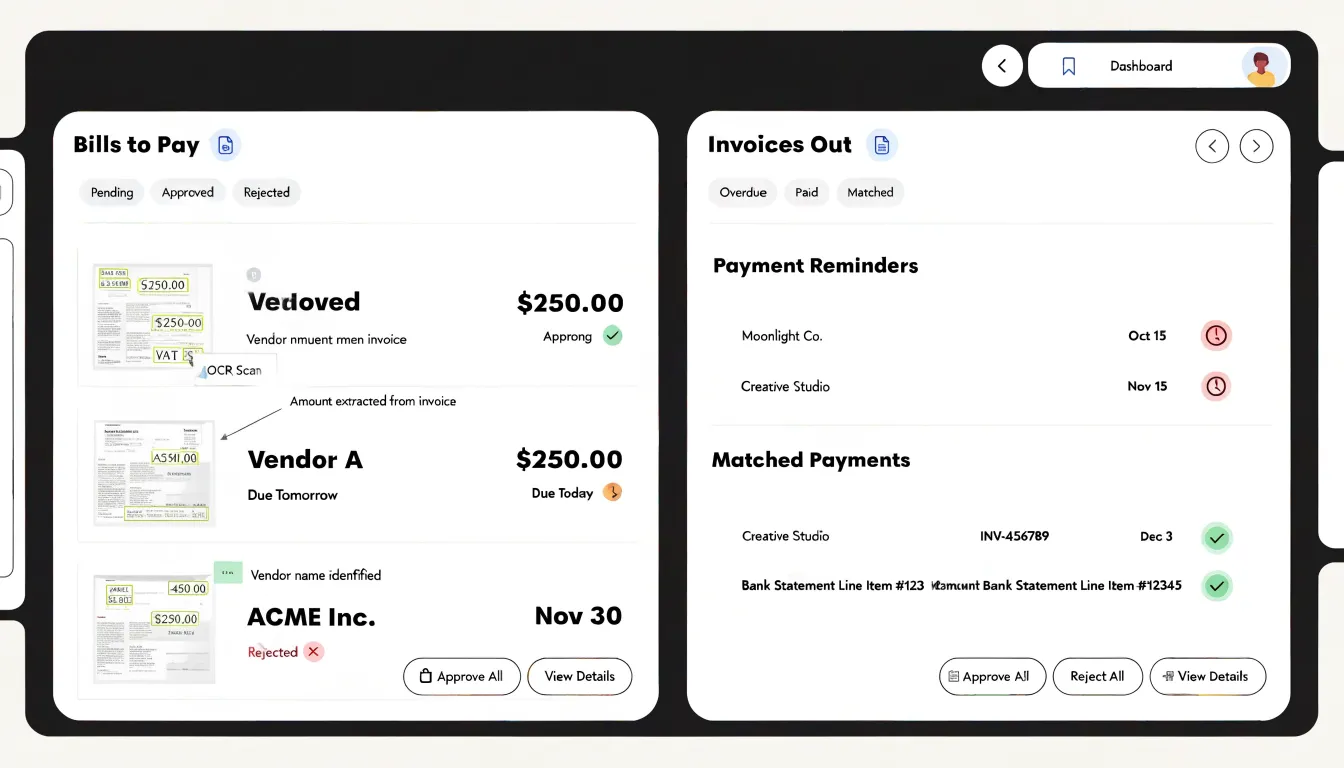
On the accounts receivable side, platforms such as FreshBooks, Zoho Invoice, Invoice Ninja, and Wave provide robust invoicing capabilities. Users can generate branded invoices, set up recurring billing, and automate payment reminders to reduce late payments. Many tools integrate with payment gateways like Stripe or PayPal, enabling customers to pay directly from the invoice. Reconciliation features automatically match payments to invoices, flag discrepancies, and update accounting records, streamlining the cash application process.
Comprehensive solutions like NetSuite and Sage Intacct combine both AP and AR functionalities, offering centralized dashboards and advanced reporting. These systems support multi-currency transactions, tax calculations, and integration with CRM and ERP platforms, making them suitable for growing businesses. Implementation typically involves connecting bank feeds, setting up approval hierarchies, and customizing templates, which requires initial effort but yields long-term efficiency gains. Overall, the right software simplifies financial operations by automating repetitive tasks, enhancing visibility into cash flow, and reducing errors.
Simple Strategies to Streamline Both Invoicing and Bill Payments
Streamlining invoicing and bill payments starts with setting clear payment terms on every invoice you issue. Spell out the due date, the accepted payment methods, and any late fees directly on the document so customers know exactly what is expected of them. Consistency matters here: when every invoice follows the same format and timeline, customers learn the rhythm of your billing cycle and disputes become far less common. Pair clear terms with automated reminders that go out a few days before a due date and again shortly after it passes. A short, polite reminder sent by email or through your accounting software removes the awkwardness of chasing payments manually and keeps cash coming in on schedule.
Offering early payment discounts gives customers a financial incentive to settle invoices ahead of the due date. A modest percentage off for payment within ten days can accelerate receivables significantly, especially with business clients who manage their own cash flow carefully. On the outgoing side, scheduling bill payments in advance helps you avoid late fees and take advantage of any early-payment terms your vendors offer. Set recurring bills to pay automatically on a fixed date each month, and batch one-off payments for review once or twice a week rather than handling them piecemeal. This approach keeps payables predictable and frees up staff time.
Together, these practices feed into stronger cash flow management. When receivables arrive faster and payables follow a planned schedule, you can see exactly when money enters and leaves the business, which makes forecasting far more reliable. Review your terms, reminders, discounts, and payment schedules quarterly, adjusting them as your customer base and vendor relationships change. Small, consistent habits around invoicing and bill payment add up to a healthier balance sheet over time.
Frequently Asked Questions
What is accounts payable?
Accounts payable is money a business owes to suppliers and vendors for goods and services it has already received but not yet paid for. It is classified as a current liability on the balance sheet and is typically due within 30 to 90 days depending on negotiated terms.
What is accounts receivable?
Accounts receivable is money customers owe your business for goods or services you have already delivered. It is classified as a current asset on the balance sheet and is expected to convert into cash within a normal operating cycle, typically twelve months.
What is the difference between accounts payable and accounts receivable?
Accounts payable is an obligation to pay a supplier, while accounts receivable is a right to receive payment from a customer. Accounts payable is a current liability and represents future cash outflow, whereas accounts receivable is a current asset and represents future cash inflow.
What happens if customers do not pay their invoices?
Uncollected receivables can create a cash flow crunch because revenue is recorded before cash arrives, while payroll, rent, utilities, and loan installments still need to be paid. If customers pay late or not at all, the business may need to borrow, use invoice factoring, stretch supplier payments, or absorb bad debt write-offs.
What happens if you delay your accounts payable?
Delaying accounts payable can lead to late fees and interest charges, stricter payment terms, and damaged supplier relationships. Suppliers may deprioritize orders or halt deliveries until outstanding balances are cleared, which can cause operational disruptions.
What software helps manage accounts payable and receivable?
Tools such as QuickBooks, Xero, Bill.com, and SAP Concur can automate accounts payable workflows, while FreshBooks, Zoho Invoice, Invoice Ninja, and Wave support accounts receivable invoicing and payment reminders. Comprehensive solutions like NetSuite and Sage Intacct combine both AP and AR functionalities for centralized dashboards and advanced reporting.