
Accounts Receivable
Accounts receivable is money customers owe for goods or services already delivered, recorded as a current asset on the balance sheet, usually within one operating cycle or twelve months. It includes outstanding invoices still within payment terms, often shown net of an allowance for doubtful accounts, while notes receivable, loans, and prepaid expenses are excluded.
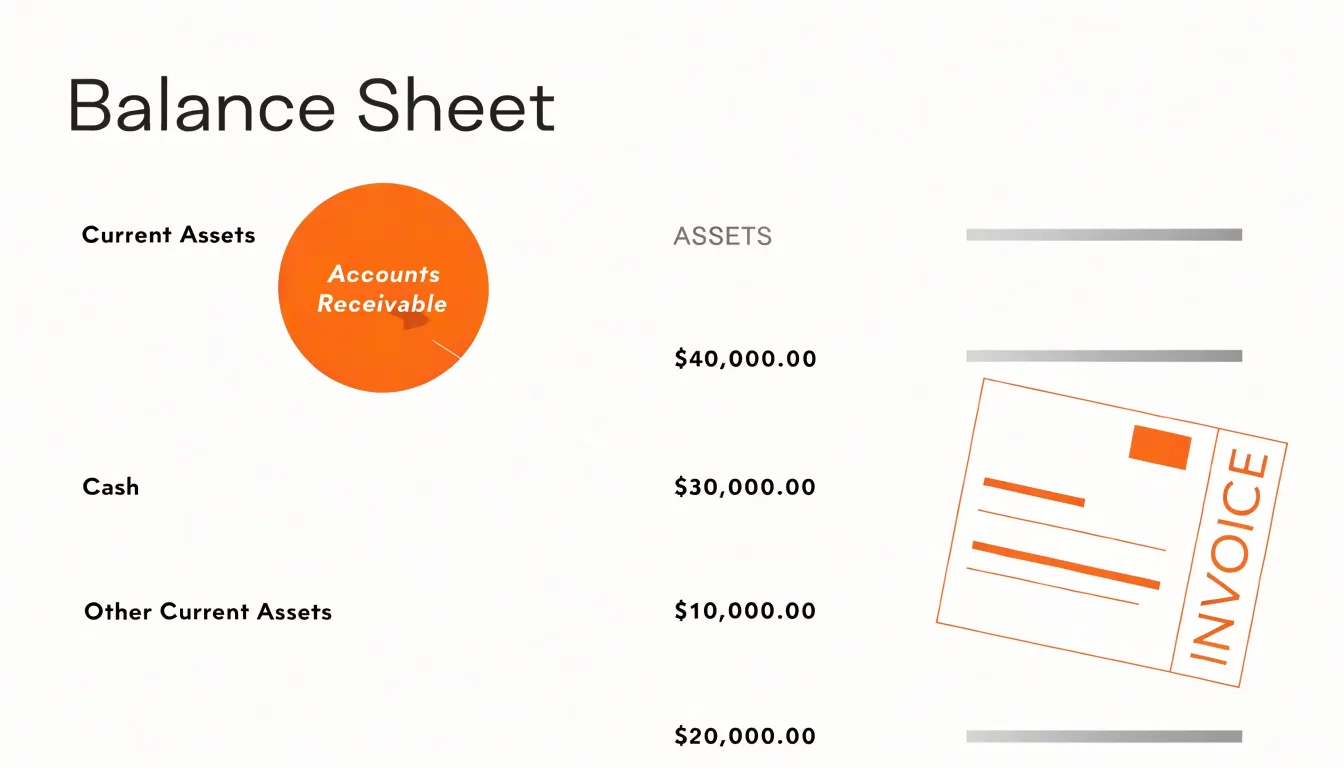
Table of Contents
- What counts as accounts receivable on your balance sheet
- The difference between accounts receivable and accounts payable
- The invoicing lifecycle
- Why do unpaid invoices cause severe cash flow problems
- Setting clear credit terms
- Essential elements every clear invoice must include to avoid payment delays
- Step by step strategy to follow up on overdue customer payments
- Automated AR software
- How should small businesses handle bad debt and uncollectible accounts
What counts as accounts receivable on your balance sheet
Accounts receivable represents money your customers owe you for goods or services you have already delivered, and understanding exactly what belongs in this line item keeps your balance sheet accurate and useful. The clearest candidates are outstanding invoices: once you issue a bill with payment terms, the full amount becomes AR until the customer pays. This includes standard net-30 or net-60 invoices, progress billings on longer projects, and any invoiced amount still within its payment window, even if it is not yet overdue. Unbilled revenue can also qualify in certain accounting frameworks. If you have completed work or delivered goods under a contract but have not yet issued an invoice, GAAP allows you to record that earned amount as a receivable in many cases, often labeled as unbilled AR or contract assets, because the right to payment has effectively been established. Retail credit card settlements, trade credit extended to business customers, and amounts due from insured parties after a claim approvals can similarly sit in AR depending on how your books are structured.
Several items look similar but do not belong in accounts receivable. Notes receivable, which are formalized with a written promissory agreement and typically carry interest, are reported separately. Loans you have made to employees or other parties are also distinct from trade receivables. Prepaid expenses move in the opposite direction, representing money you have already paid for future benefits rather than money owed to you. Cash advances to suppliers, deposits, and employee expense advances are other assets, not AR. Refundable tax credits and insurance recoveries may be receivables in a broad sense but are usually broken out on their own lines so readers can see trade versus non-trade amounts.
On the balance sheet, AR appears as a current asset, generally near the top because it is expected to convert to cash within one operating cycle, usually twelve months. It is typically shown net of an allowance for doubtful accounts, so the reported figure reflects the amount you reasonably expect to collect. Because AR ties directly to revenue and cash flow, it pays to review the account regularly, aging the balances and confirming that only genuine amounts owed by customers are included.
The difference between accounts receivable and accounts payable
Accounts receivable and accounts payable are two of the most fundamental figures in any business’s financial records, and understanding how they differ is essential for reading a balance sheet accurately and for managing cash with confidence. Accounts receivable represents money owed to your business by customers. When you invoice a client for goods or services delivered on credit, that invoice becomes an account receivable: a current asset on your balance sheet, reflecting a payment you expect to collect, typically within 30, 60, or 90 days. Accounts payable sits on the other side of the ledger. It represents money your business owes to suppliers, vendors, and service providers for purchases made on credit. AP is recorded as a current liability, reflecting obligations you must settle in the near term.
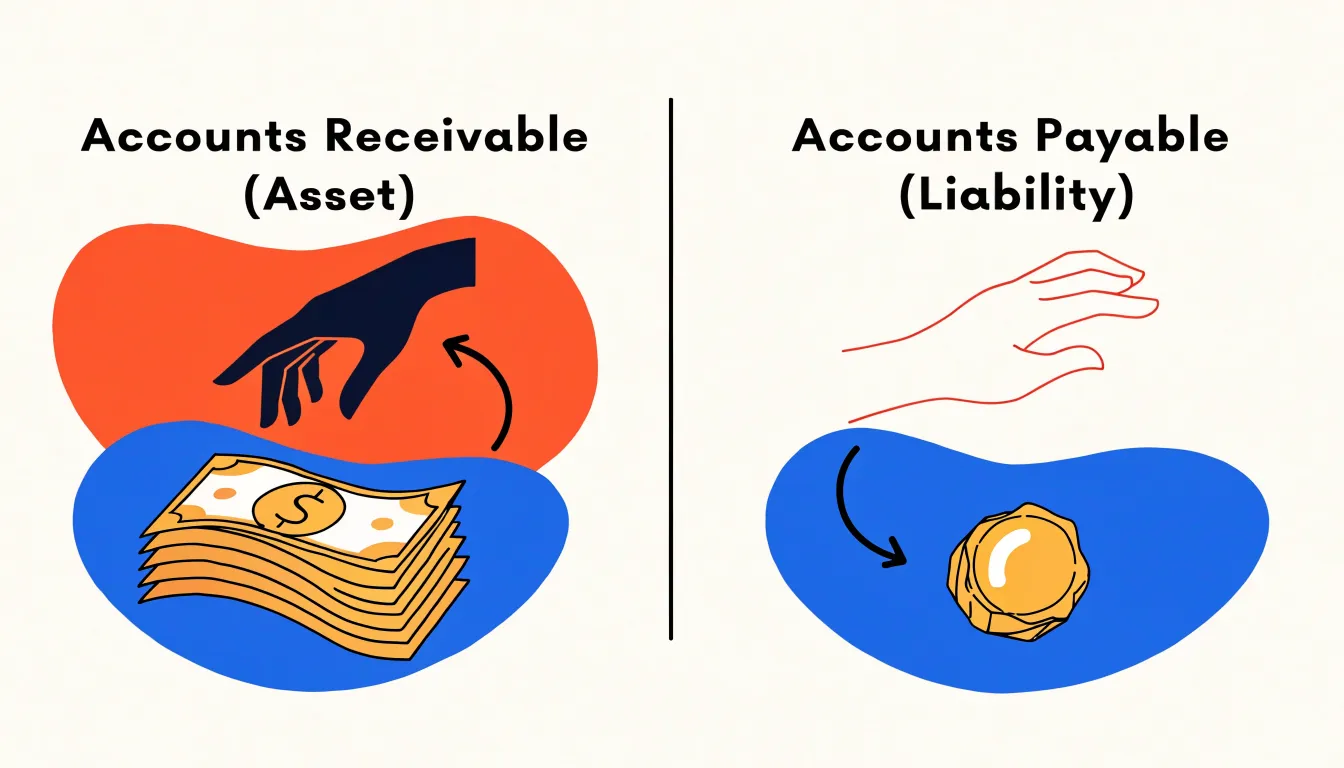
Because one is an asset and the other a liability, they occupy opposite sides of the balance sheet and pull in opposite directions on your financial position. Growing receivables increase your reported assets, while growing payables increase your liabilities. The cash flow implications follow directly from this. Collecting receivables brings cash into the business, which is why slow-paying customers can strain even a profitable company. Paying payables sends cash out, and stretching payment terms can temporarily ease pressure, though it carries relationship and credibility risks.
The two figures also interact in ways worth watching. The gap between the days it takes to collect from customers and the days you take to pay suppliers shapes your working capital cycle. If customers pay in 60 days while suppliers expect payment in 30, you fund the difference from your own reserves. Monitoring AR and AP together, rather than in isolation, gives you a realistic picture of liquidity. A healthy balance involves collecting receivables promptly, paying payables on schedule, and keeping both under regular review so that neither side quietly undermines the other.
The invoicing lifecycle
The invoicing lifecycle begins the moment a service has been delivered or a product shipped. Before any document is created, the groundwork matters: the terms agreed with the client, the payment window specified in the contract, and the details of what was provided all feed into what the invoice will say. Generating the invoice means capturing the correct customer information, an accurate description of the work performed, the agreed rate or price, any applicable taxes, and a clear due date. Errors at this stage ripple outward, so many businesses build templates and checklists to ensure consistency across every document they issue.
Once generated, the invoice must reach the right person through the right channel. Sending it promptly matters more than many realize, since the payment clock typically starts on the issue date. Whether the invoice travels by email, through a client portal, or via a procurement system, keeping a record of when and to whom it was sent provides a paper trail for later reference. Some organizations confirm receipt with the client, which heads off the common excuse that an invoice was never received.
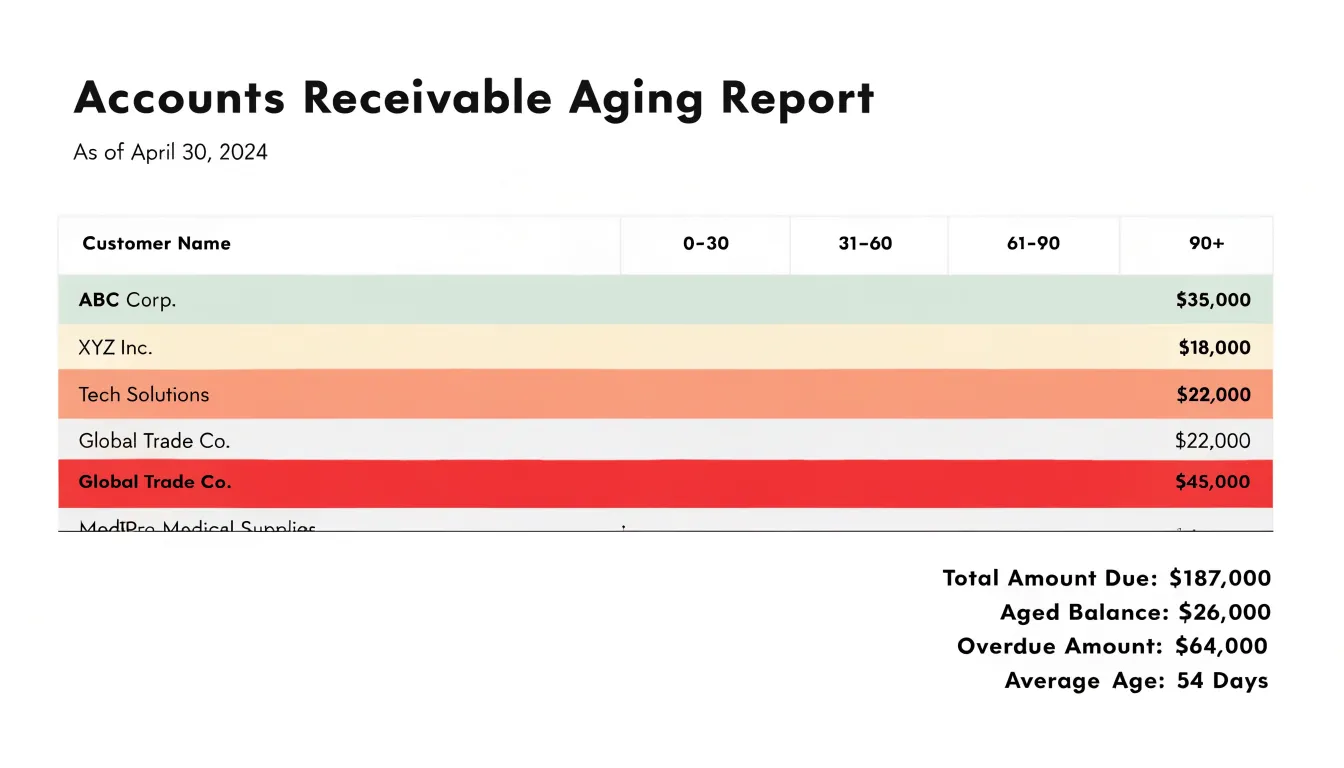
Tracking is the stage where receivables management becomes active rather than passive. A business records each invoice in an aging report, which groups outstanding amounts by how long they have been unpaid, typically in thirty-day bands. This view reveals which customers habitually pay late and which invoices are approaching or passing their due dates. Follow-up communication, whether a gentle reminder or a firmer escalation, flows naturally from this tracking. The goal is to keep every invoice visible until it is settled.
Receiving payment closes the customer-facing portion of the cycle, but the work is not finished. The incoming funds must be matched against the specific invoice they relate to, a process known as reconciliation. Bank statements, payment processor records, and accounting software all need to agree. Partial payments, short payments, and deductions require investigation so that discrepancies do not linger in the books. When reconciliation is complete, the invoice is marked paid, the receivable balance is cleared, and the revenue is properly recorded. This final step ensures the accounting records reflect reality and gives the business confidence that its reported cash position is accurate.
Why do unpaid invoices cause severe cash flow problems
Unpaid invoices create a mounting cash flow problem because revenue is recognized on paper before any money actually arrives. When a business issues an invoice, it has already delivered the goods or services and absorbed the associated costs — materials, labor, overhead — yet the cash remains in the customer’s hands until payment is made. Every day that invoice goes unpaid is a day the business is financing its customer’s operations out of its own pocket. Multiply that across dozens or hundreds of outstanding invoices, and the effect compounds: the company appears profitable on its income statement while its bank account tells a different story.
The first symptom is a squeeze on liquidity. Day-to-day operations depend on a predictable inflow of cash to cover rent, utilities, fuel, subscriptions, and routine expenses. When expected payments arrive weeks late, the timing gap widens, and the business must find money elsewhere. Many owners turn first to reserves built up over years of disciplined saving. Drawing those down feels painless in the moment, but it erodes the financial cushion that protects the company against genuine emergencies, and rebuilding reserves takes far longer than depleting them. Once reserves run thin, the next stop is a credit line or short-term loan. That solution carries interest costs that eat directly into margins, and it converts a timing problem into a permanent expense. Repeated borrowing to bridge late payments can also damage the company’s credit standing, making future financing more expensive or harder to obtain.
As the strain deepens, obligations start slipping. Payroll is often the most visible casualty; missing or delaying wages damages morale and can trigger legal exposure. Supplier payments are frequently the next domino to fall. A company that pays its vendors late may face halted deliveries, lost early-payment discounts, or damaged relationships that took years to build. In severe cases, suppliers demand cash on delivery or refuse to extend terms at all, which tightens the cash squeeze even further. The result is a downward spiral in which late customer payments beget late vendor payments, and a fundamentally healthy business can find itself in crisis purely because of collection timing.
Setting clear credit terms
Before extending any payment window, establish a structured vetting process to assess each client’s creditworthiness. Start by requesting trade references from suppliers who have worked with the client, and contact those references directly to ask about payment timing, consistency, and any disputes. Pair this with a review of credit reports from agencies such as Dun & Bradstreet or Experian, focusing on payment history, outstanding liens, and public records that indicate financial stress. For existing clients, examine their past payment behavior in your own records, noting average days to pay, frequency of late payments, and any patterns of partial payments. These steps give you a factual basis for deciding whether to offer terms and what limits to set.
Once you have gathered this information, translate it into clear, written credit terms. Specify the payment window, such as net 30 or net 45, and state the due date precisely. Include any early payment discounts or late fees, and make sure the client acknowledges these terms in writing before you deliver goods or services. Set a credit limit based on your assessment, and review it periodically as the relationship develops. For clients with limited history, consider starting with stricter terms, such as prepayment or a shorter window, and extending more favorable terms after a track record of on-time payments.
Documenting your credit policy and applying it consistently across clients reduces ambiguity and helps avoid disputes. Train your sales and finance teams to follow the same vetting steps, so every client receives a fair and thorough review. When you set terms upfront, you create a shared expectation that supports timely payments and protects your cash flow. This proactive approach turns credit management from a reactive chase into a predictable part of your business operations.
Essential elements every clear invoice must include to avoid payment delays
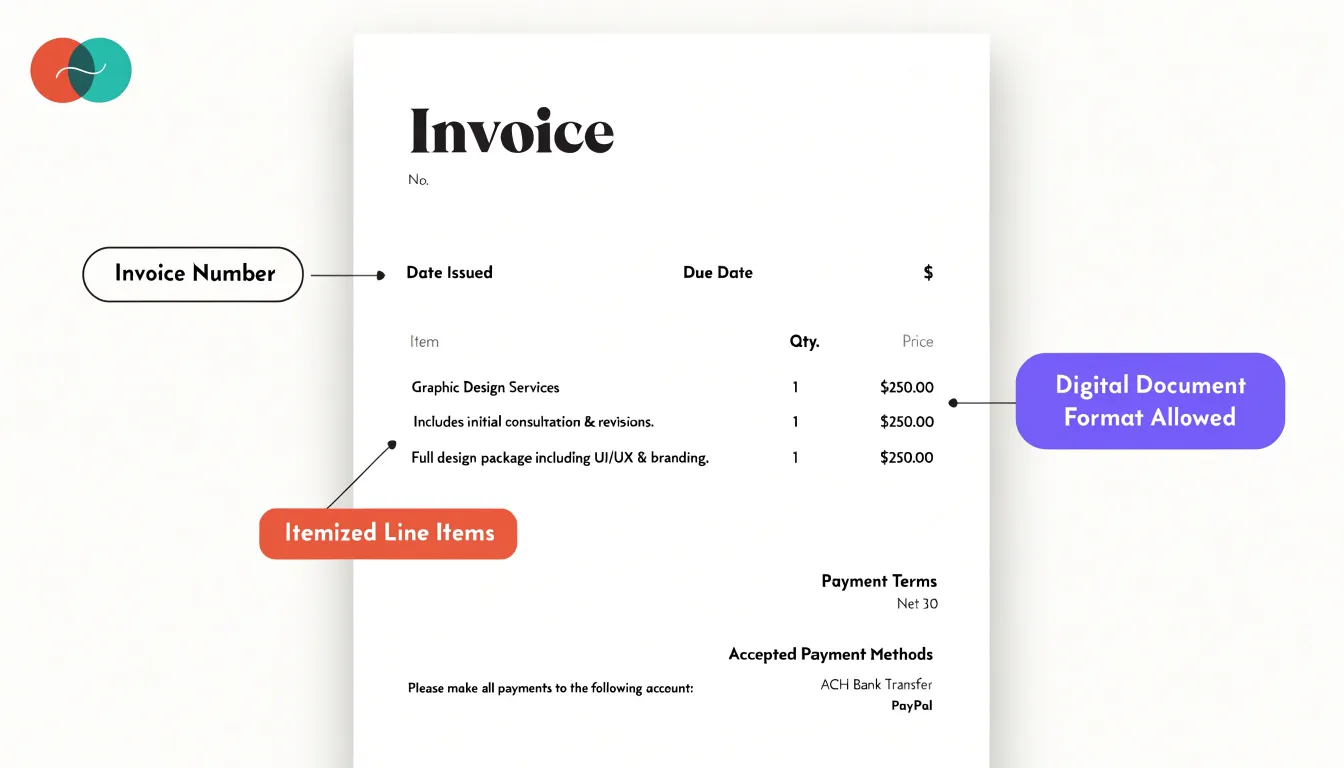
A clear invoice is the foundation of prompt payment. When key elements are missing or ambiguous, customers may delay settlement while they seek clarification, or they may simply set the invoice aside. To prevent confusion and late payment, every invoice should include a core set of components. First, a unique invoice number for tracking and reference. This number should appear prominently and be used consistently in all correspondence. Second, the invoice date, which establishes when the payment clock starts. Closely related is the due date, calculated from the payment terms. Both dates should be explicit to avoid any misunderstanding about when payment is expected.
The invoice must clearly identify both parties: the seller’s legal name, address, and contact information, and the customer’s name and billing address. Include a purchase order number if one was provided, as many organizations require it to process payment. Next, itemize the goods or services provided. Each line should describe the item, quantity, unit price, and total. Vague descriptions like ‘consulting services’ can trigger queries; instead, specify the project, period, or deliverable. If taxes apply, show the tax rate and amount separately. Any discounts or credits should also be itemized.
Payment terms are critical. State the terms explicitly, such as ‘Net 30’ or ‘Due upon receipt,’ and explain any early payment discounts or late fees. Include accepted payment methods: bank transfer details, check instructions, or online payment links. For bank transfers, provide the account number, routing number, and any reference code required. This reduces friction and prevents delays caused by customers waiting for payment instructions. Finally, add a remittance advice or payment slip if applicable, and include a contact person for billing inquiries. A brief thank-you note can also foster goodwill. By ensuring every invoice contains these essential elements, businesses can minimize confusion, speed up processing, and get paid on time.
Step by step strategy to follow up on overdue customer payments
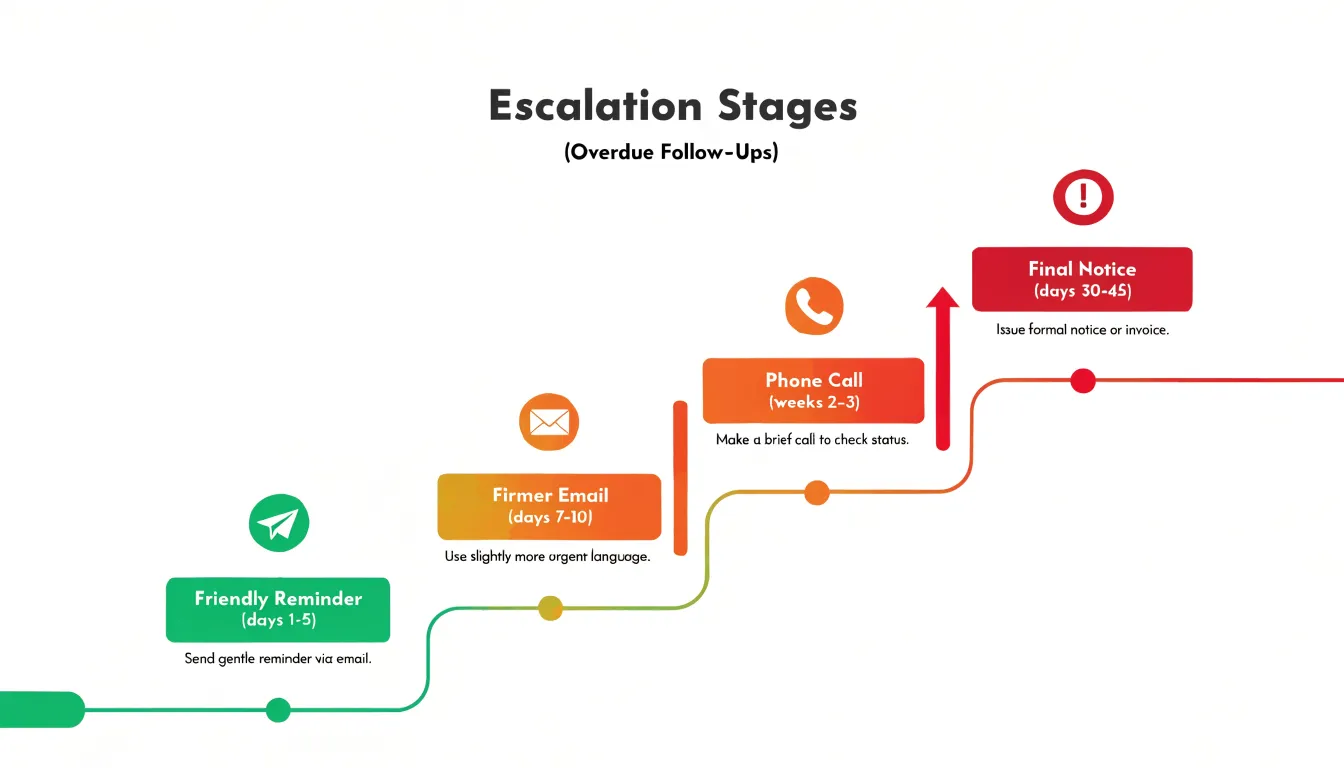
A structured follow-up process transforms overdue collections from an uncomfortable guessing game into a predictable routine. The first stage is the initial reminder, sent as soon as an invoice passes its due date by a few days. This reminder should be friendly and assume an oversight: a short email restating the invoice number, amount, due date, and a payment link, with a tone that says you value the relationship and simply want to keep records tidy. Keep it brief and free of any hint of accusation.
The second stage involves escalating reminders. If payment has not arrived within roughly a week to ten days of the first notice, send a firmer message that references the original reminder, restates the outstanding balance, and asks for a specific payment date. The tone shifts from cordial to businesslike, though it remains professional. A second escalation a week later can note that the account is now significantly past due and mention any late fees or credit holds that apply under your terms.
Phone calls form the third stage, typically beginning two to three weeks past due. A call cuts through email silence and lets you confirm whether there is a dispute, a cash-flow problem, or simple neglect. Prepare by reviewing the account history, open with a neutral question about the invoice, and listen for the reason behind the delay. Agree on a concrete commitment, such as a payment date or installment plan, and confirm the conversation in writing immediately afterward. Keep your tone calm and solution-oriented; the goal is resolution, not confrontation.
Final notices come last, usually around 30 to 45 days past due. This is a formal document stating the amount owed, the payment deadline, and the consequences of non-payment, such as suspension of services, referral to a collections agency, or legal action. Use firm, factual language and avoid emotional appeals. Send it by email and, for larger balances, by certified mail.
Throughout every stage, document each contact, keep timing consistent, and match tone to urgency. A disciplined cadence signals professionalism and prompts faster payment while preserving the customer relationship wherever possible.
Automated AR software
Manual spreadsheet tracking works well for a small business with a modest number of customers and predictable payment patterns. Over time, though, the spreadsheet that once felt sufficient begins to show strain. One of the clearest signals that it is time to consider automated accounts receivable software is a steady rise in invoice volume. As the customer base grows and monthly billing multiplies, rows and tabs accumulate, formulas multiply, and the simple ledger becomes a complicated web that only its creator fully understands. At that point, the risk of a missed invoice or a duplicated entry climbs with every new line.
Errors are another reliable indicator. Manual entry invites transposed digits, skipped rows, and stale balances that no longer reflect what customers actually owe. When staff spend hours each week reconciling discrepancies, chasing down why a total does not match, or rebuilding broken formulas, the time drain itself becomes a cost. The hours poured into administration are hours not spent on collections, customer service, or growth. Frequent errors and mounting administrative hours together suggest that the manual approach has reached its practical limit.
Automated AR software addresses these pressures directly. Built-in reminder schedules send polite, timely payment nudges based on invoice due dates, reducing the need for ad hoc follow-up and shortening the average time to payment. Reporting dashboards give an at-a-glance view of outstanding balances, aging buckets, and collection trends, information that is difficult to assemble by hand and often outdated by the time it is compiled. Automation also reduces manual entry, which lowers the frequency of transcription mistakes and frees staff to focus on exceptions and relationships rather than routine data handling.
The transition does not need to be abrupt. Many businesses begin by automating reminders and reporting while keeping a familiar process for edge cases. The goal is a system that scales with invoice volume, protects accuracy, and returns time to the team. When spreadsheets start demanding more attention than the receivables themselves, automation offers a practical path forward.
How should small businesses handle bad debt and uncollectible accounts
Bad debt is an unavoidable reality for many small businesses, and having a clear process for handling uncollectible receivables protects both your cash flow and your accounting records. When an invoice remains unpaid well past its due date, the first step is to make a realistic assessment of whether the amount is genuinely collectible. A common approach is to establish a policy that treats receivables as uncollectible after a set period, often 90 to 120 days of no payment activity, though the right threshold depends on your industry and customer base. Documenting your collection efforts, including phone calls, emails, and reminder letters, creates a record that supports the write-off decision and any later tax claim.
When you decide an account is uncollectible, the write-off procedure depends on your accounting method. Businesses using the direct write-off method simply remove the specific invoice from accounts receivable and record it as a bad debt expense, which is straightforward but can distort income in the period the expense hits. Businesses using the allowance method estimate anticipated bad debts in advance and create a contra-asset allowance account, then charge specific uncollectible invoices against that allowance when they are identified. The allowance approach generally produces a more accurate picture of net realizable receivables, particularly for businesses with significant sales on credit. Whichever method you use, keep supporting documentation and note the write-off clearly in your records.
Before writing off a larger balance, many small businesses turn to a collection agency. Agencies typically work on contingency, charging a percentage of whatever they recover, which limits your upfront cost but reduces the net proceeds. Hiring an agency can make sense for substantial balances or for customers who have gone silent, and it signals seriousness. Be aware that accounts placed with agencies or sold to debt buyers may affect how you record the transaction and when you recognize any recovery.
For tax purposes, the IRS generally allows a deduction for a business bad debt that has become wholly or partially worthless during the tax year, provided the debt arose from your trade or business and you have made reasonable collection efforts. Cash-basis businesses can typically deduct the unpaid income that was previously included in gross income. Keep records of the original invoice, your collection attempts, and the date you determined the debt was worthless, and consult a tax professional to confirm how the rules apply to your situation.
Frequently Asked Questions
What counts as accounts receivable on a balance sheet?
Accounts receivable includes outstanding invoices for goods or services already delivered, such as net-30 or net-60 invoices and progress billings still within their payment window. In some accounting frameworks, unbilled revenue for completed work can also be recorded as a receivable.
What is the difference between accounts receivable and accounts payable?
Accounts receivable is money customers owe your business and is a current asset, while accounts payable is money your business owes suppliers and vendors and is a current liability. Collecting receivables brings cash in, while paying payables sends cash out.
What should every invoice include to avoid payment delays?
Every invoice should include a unique invoice number, invoice date, due date, and clear identification of both parties. It should also itemize goods or services, show taxes and discounts separately, state payment terms, include accepted payment methods, and list a contact for billing inquiries.
How should a small business set credit terms for customers?
Before extending a payment window, assess each client’s creditworthiness using trade references, credit reports, and their past payment behavior. Then put clear written terms in place, including the payment window, due date, early payment discounts or late fees, and a credit limit.
How should I follow up on overdue customer payments?
Start with a friendly reminder a few days after the due date, then send firmer reminders roughly a week to ten days apart. If needed, follow up by phone around two to three weeks past due and send a final notice around 30 to 45 days past due.
How should small businesses handle bad debt and uncollectible accounts?
First assess whether an unpaid invoice is genuinely collectible, often treating receivables as uncollectible after 90 to 120 days of no payment activity depending on the industry. Then write it off using the direct write-off or allowance method, keep supporting documentation, and consider a collection agency for larger balances. For tax purposes, the IRS generally allows a deduction for a business bad debt that has become wholly or partially worthless, and you should consult a tax professional.