
Assets vs Liabilities
An asset is anything you own that holds measurable economic value or can generate income, such as cash, investments, real estate, and retirement accounts. A liability is a financial obligation that drains cash flow, such as mortgages, car loans, credit card balances, and student debt. Net worth equals total assets minus total liabilities.
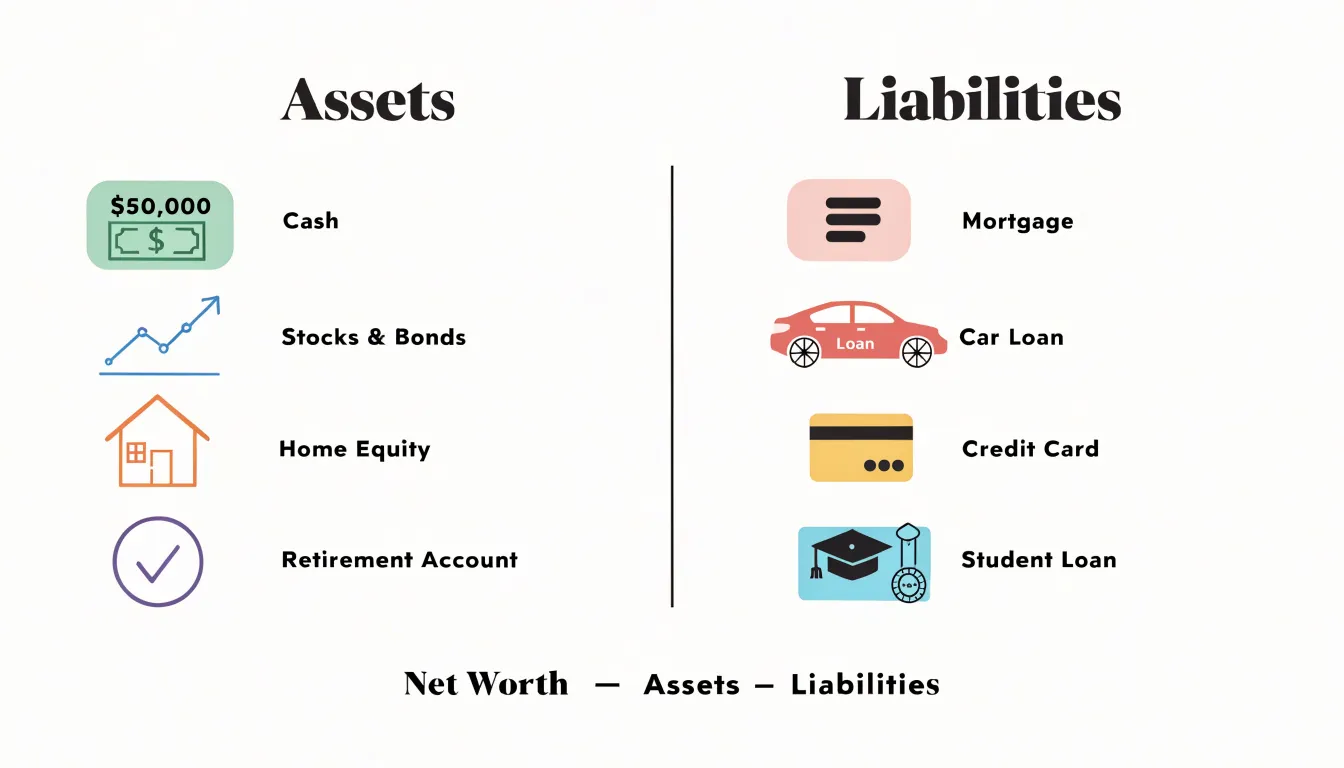
Table of Contents
- What counts as an asset in personal accounting
- Understanding liabilities and how they drain your cash flow
- Assets vs Liabilities
- Real life examples of assets that build wealth over time
- Common examples of liabilities that cost you money
- Is your primary home an asset or a liability
- How to shift your monthly cash flow from debt payments to wealth building
What counts as an asset in personal accounting
In personal accounting, an asset is anything you own that carries measurable economic value or has the capacity to generate income for you. The core criteria for classifying something as an asset come down to ownership and value: you must have a legal or beneficial claim to the item, and that item must be worth something in monetary terms or capable of producing a future financial benefit. Two people can hold the same object, yet only the owner records it as an asset. Similarly, an item you own but that has no resale value and produces no income generally does not belong on the asset side of your personal balance sheet, though sentimental value may still matter to you personally.
The most obvious category is cash and cash equivalents. This includes the balance in your checking and savings accounts, physical currency, and money held in accounts that can be converted to cash quickly and with minimal risk, such as money market funds or short-term certificates of deposit. Cash is the most liquid asset, meaning it can be spent or transferred with ease.
Investments form another major category. Stocks, bonds, mutual funds, exchange-traded funds, retirement accounts, and brokerage holdings all count as assets because they carry market value and are held with the expectation of growth or income through dividends and interest. Even when market prices fluctuate, the holdings remain assets; their recorded value simply adjusts to reflect current conditions.
Property rounds out the typical list. Real estate, whether a primary residence, a rental unit, or land, is an asset because it holds market value and can generate rental income. Physical possessions such as vehicles, jewelry, furniture, and electronics may also qualify when they have resale value, though they often depreciate over time and are less liquid than cash or investments.
Certain intangible items can also be assets, including money owed to you by others and the cash value of life insurance policies. The unifying thread across all these examples is straightforward: if you own it, it holds value, and it can be converted into cash or produce income, it belongs in your personal asset column.
Understanding liabilities and how they drain your cash flow
Liabilities are financial obligations that require you to spend money, often on a regular basis. They represent debts or commitments that drain your cash flow, reducing the amount of money you have available for other purposes. Common examples include mortgages, car loans, credit card balances, student loans, and unpaid bills. Each of these creates a recurring outflow of cash, whether through monthly payments, interest charges, or fees. Understanding what makes something a liability is essential for managing your personal finances effectively.
At its core, a liability is any obligation that costs you money. This includes both principal and interest payments on loans, as well as ongoing expenses like insurance premiums or property taxes that are tied to financed assets. Even if an asset is associated with the liability—such as a house backing a mortgage—the loan itself remains a liability because it requires you to make payments. The key distinction is that liabilities take money out of your pocket, while assets put money in.
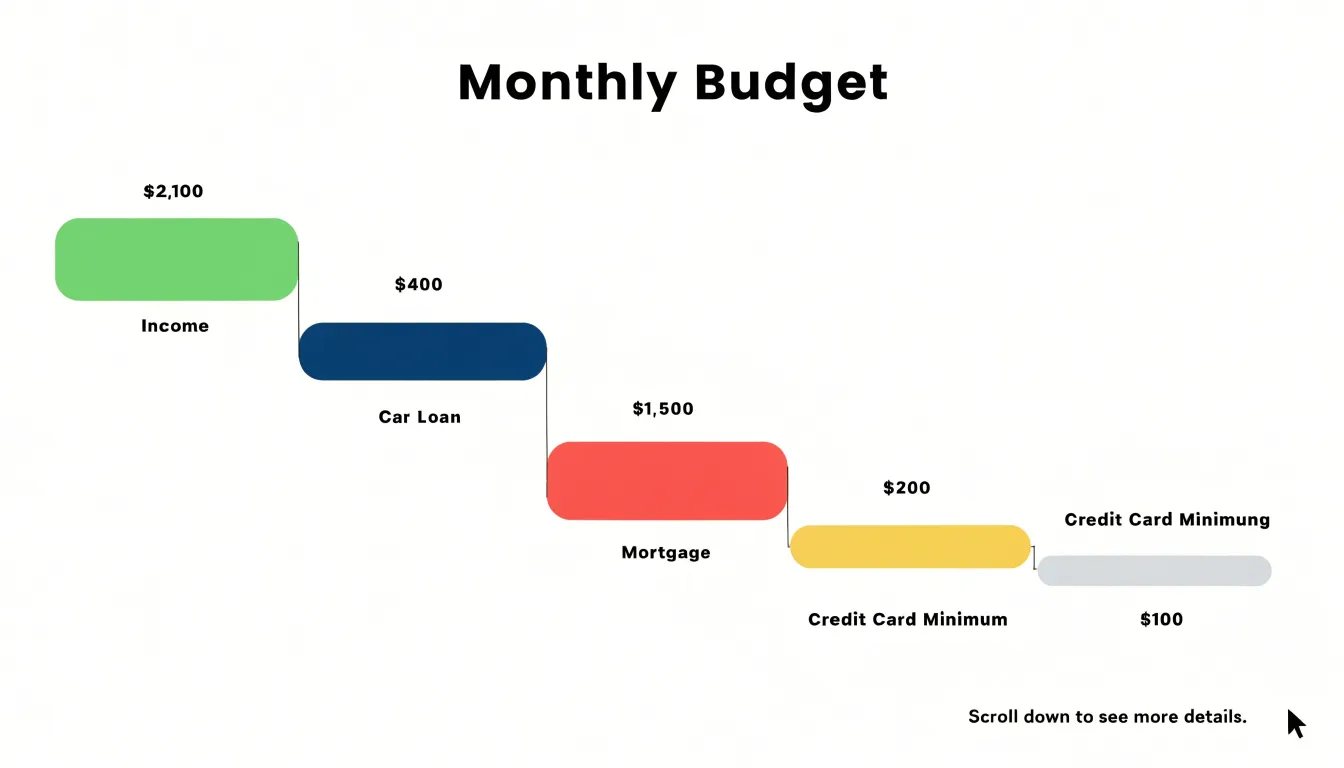
The impact of liabilities on your cash flow is direct and measurable. Each month, a portion of your income is allocated to servicing these obligations. For example, a car loan payment might be $400 per month, a mortgage $1,500, and credit card minimum payments $200. Together, these reduce your available cash by $2,100. That money cannot be used for savings, investments, or discretionary spending. Over time, the cumulative effect can be significant, limiting your financial flexibility and ability to build wealth.
Moreover, liabilities often come with interest, which increases the total amount you repay. High-interest debt, such as credit card balances, can be particularly draining, as a large portion of your payment goes toward interest rather than reducing the principal. This creates a cycle where you owe more over time, further constraining your cash flow. By recognizing liabilities and their costs, you can take steps to manage or reduce them, freeing up cash for goals like investing or saving for the future. In short, liabilities are a critical factor in your financial health, and understanding their drain on cash flow is the first step toward gaining control of your finances.
Assets vs Liabilities
Net worth is calculated by subtracting everything you owe from everything you own. On one side of the equation sit your assets: cash in checking and savings accounts, investment portfolios, retirement accounts, the market value of your home and vehicles, and any other property with resale value. On the other side sit your liabilities: mortgage balances, auto loans, student debt, credit card balances, personal loans, and any other outstanding obligations. Subtract the second figure from the first, and you have a single number that captures your financial position at a given moment in time.
The simplicity of this equation is precisely what makes it powerful. Unlike income, which fluctuates month to month and can rise while your financial position deteriorates, net worth gives you a snapshot of accumulated results. Someone earning a high salary while carrying heavy consumer debt may have a lower net worth than someone with a modest income who saves consistently and borrows sparingly. The equation cuts through the noise of cash flow and reveals whether your resources are genuinely growing over time.
This is why net worth functions as the foundation of financial health. Every meaningful financial decision ultimately moves one of the two variables. Saving more increases assets. Paying down a loan reduces liabilities. Buying a home with a mortgage adds an asset and a liability simultaneously, and the net effect depends on the down payment and the property’s value over time. When you view each decision through the lens of the equation, you begin to see how small, consistent choices compound into substantial shifts in your overall position.
The equation also provides a practical benchmark. Tracking net worth quarterly or annually turns an abstract sense of financial well-being into a measurable trend line. A rising net worth signals that assets are outpacing liabilities, while a flat or declining figure is an early warning that spending, borrowing, or investment returns need attention.
Because the calculation relies on current values, accuracy matters. Assets should be recorded at what they could realistically be sold for, and liabilities at their full outstanding balances. Revisiting these figures regularly keeps the equation honest and turns it into a reliable tool for planning, goal-setting, and long-term financial decision-making.
Real life examples of assets that build wealth over time
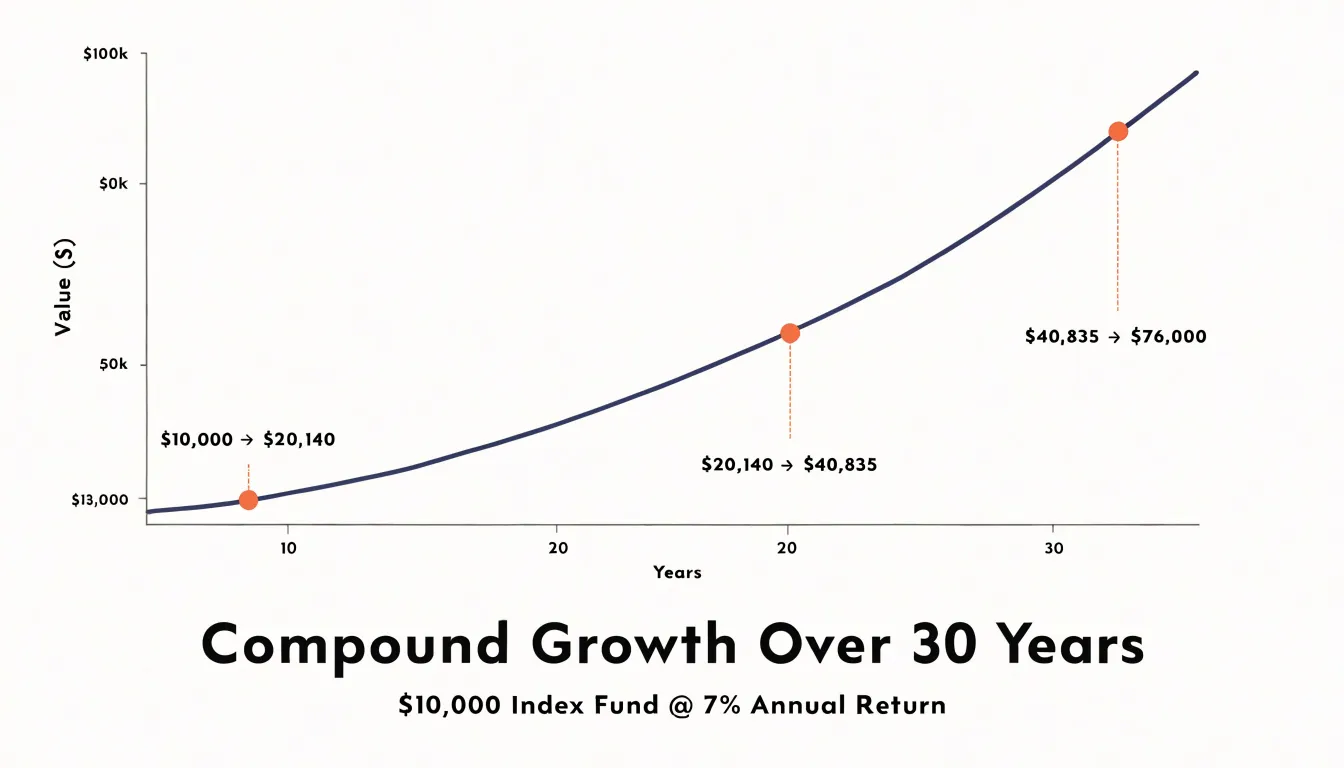
Consider stocks: when you buy shares in a company, you own a piece of its future earnings. As the company grows and becomes more profitable, the value of your shares typically rises. Many stocks also pay dividends—a portion of profits distributed to shareholders—which you can reinvest to buy more shares, compounding your returns over time. For example, a $10,000 investment in a broad stock market index fund earning an average 7% annual return would grow to over $76,000 in 30 years, thanks to compound growth. Bonds work similarly, though with less volatility: you lend money to a government or corporation in exchange for regular interest payments, and you get your principal back at maturity. While bonds generally offer lower returns than stocks, they provide steady income and help balance risk in a portfolio. Rental properties are another powerful wealth-building asset. When you buy a property and rent it out, you receive monthly rental income that can cover the mortgage and expenses, and potentially leave you with positive cash flow. Meanwhile, the property itself may appreciate in value over time. Additionally, you can use the rental income to pay down the mortgage, building equity. After 20 or 30 years, you could own the property outright, generating significant passive income and holding a valuable asset that has likely increased in price. Retirement accounts, such as 401(k)s and IRAs, are tax-advantaged vehicles that hold investments like stocks, bonds, and mutual funds. Contributions to these accounts often come with tax benefits—either tax-deferred growth or tax-free withdrawals—which can significantly boost your long-term returns. For instance, contributing $5,000 annually to an IRA earning 7% annually would grow to over $500,000 in 30 years, thanks to compound interest and tax advantages. Each of these assets works by either producing ongoing income (like dividends, interest, or rent) or appreciating in value (like stocks and real estate), and often both. By reinvesting the income and allowing appreciation to compound, you build wealth steadily over time. The key is to start early, stay consistent, and let the power of compounding work in your favor.
Common examples of liabilities that cost you money
Liabilities are financial obligations that require you to spend money over time. Common examples include credit card debt, car loans, and mortgages. While these instruments can serve practical purposes, they all share a fundamental characteristic: they create ongoing expenses and interest payments that reduce your available cash flow.
Credit card debt is perhaps the most familiar liability. When you carry a balance, the issuer charges interest on the outstanding amount, often at a high annual percentage rate. This interest compounds, meaning you pay interest on interest, which can quickly escalate the total cost of your purchases. Beyond interest, credit cards may also impose annual fees, late payment penalties, and over-limit charges. The result is that the original purchase price becomes a distant memory as you continue to pay for the item long after you’ve bought it.
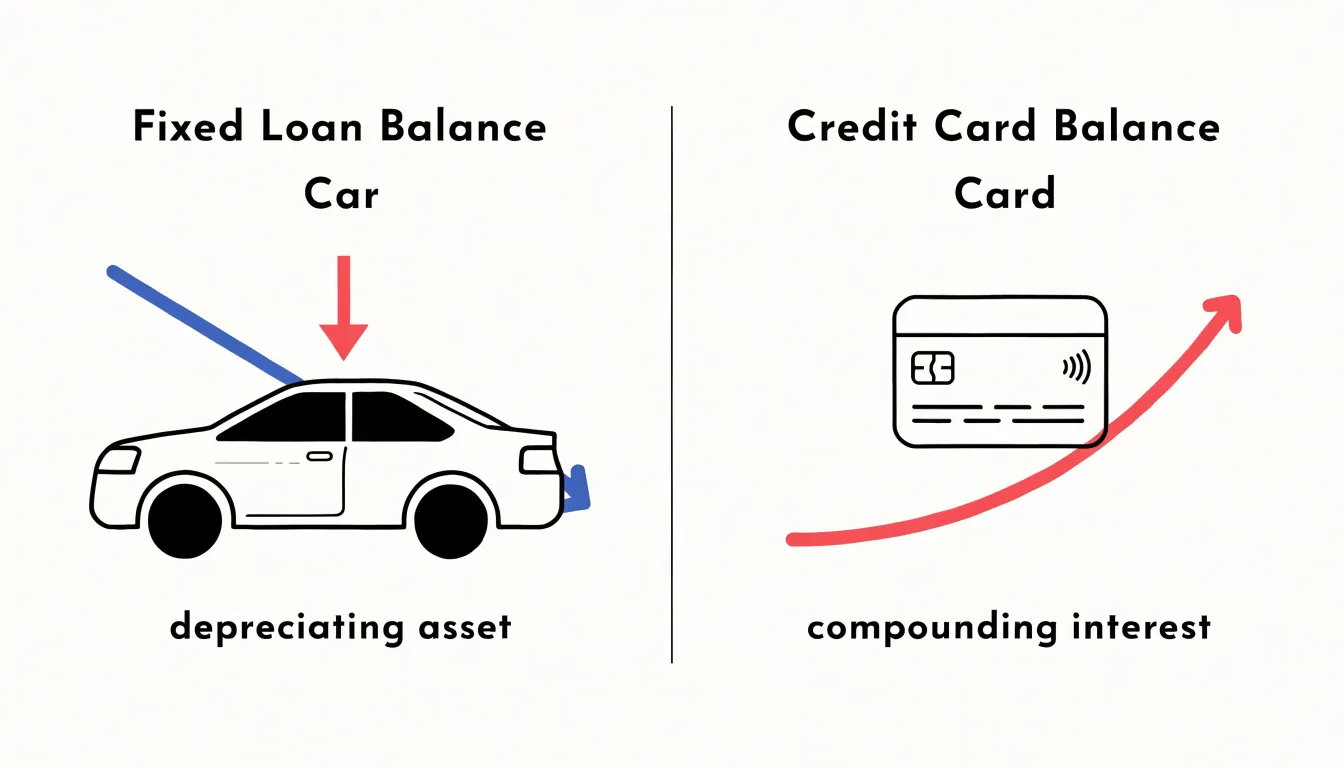
Car loans are another typical liability. A car depreciates in value the moment you drive it off the lot, yet the loan balance remains fixed. You make monthly payments that include both principal and interest, and the interest portion is calculated on the declining balance. Additionally, a car loan often requires full coverage insurance, which can be more expensive than liability-only coverage. Maintenance, fuel, and registration fees add to the ongoing cost of ownership. In this way, a car loan ties up a significant portion of your monthly budget in an asset that loses value over time.
Mortgages represent a larger and longer-term liability. A mortgage allows you to purchase a home without paying the full price upfront, but it comes with decades of monthly payments. Each payment includes interest, which is front-loaded so that in the early years, a larger share goes toward interest rather than principal. Over the life of the loan, the total interest paid can equal a substantial fraction of the home’s original price. Moreover, homeownership brings property taxes, insurance, and maintenance costs, all of which are ongoing expenses.
In each case, these liabilities demand regular cash outflows that can strain your budget and limit your ability to save or invest. They also carry the risk of accumulating further if not managed carefully. Understanding how these common liabilities generate costs is a first step toward making informed financial decisions.
Is your primary home an asset or a liability
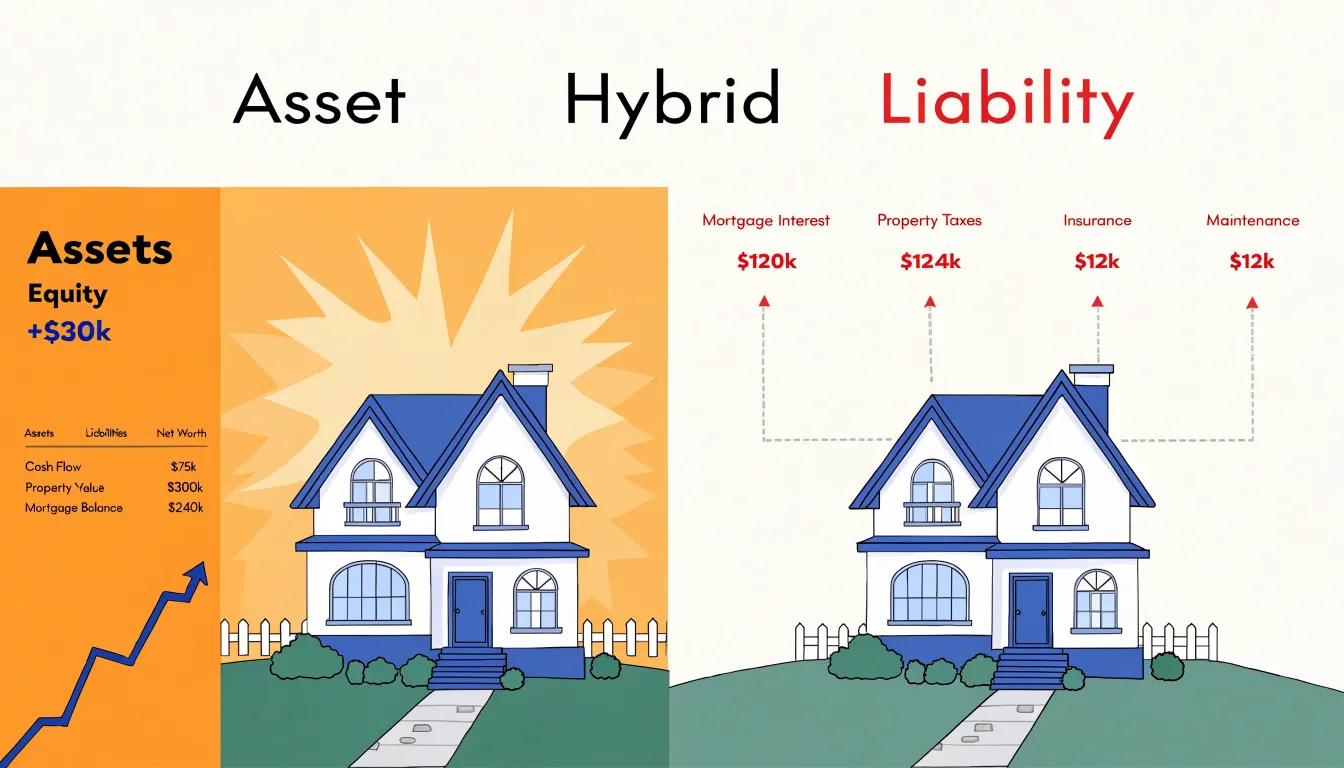
The question of whether a primary home counts as an asset or a liability sits at the center of many household financial discussions, and the disagreement persists because both sides describe something real. On the asset side, a home is a store of value. It can be bought and sold, it typically appreciates over long periods in many markets, and it builds equity as the mortgage is paid down. For most families, the home is the largest single item on their personal balance sheet, and that equity can be borrowed against, transferred through sale, or passed on to heirs. A homeowner who sells after decades of price growth may realize a substantial gain, which reinforces the view that the property functions as an investment.
The liability view focuses on the ongoing outflows that ownership requires. Mortgage interest, property taxes, insurance, maintenance, repairs, and upgrades all consume cash, and none of these costs disappear once the mortgage is retired. A home does not generate income the way a dividend-paying stock or a rental property does; it produces shelter, which is a consumption benefit rather than a cash flow. Money tied up in home equity is also illiquid, and selling involves transaction costs, time, and often significant lifestyle disruption. From this angle, the home behaves like an expense that happens to hold residual value.
Much of the disagreement comes down to definitions. In strict accounting terms, a home is an asset because it is a resource with measurable value that can be converted to cash. In cash-flow terms, it often behaves like a liability because it drains money month after month. A balanced view treats the home as a hybrid: an asset on the balance sheet and a cost on the income statement. Its value depends heavily on local market conditions, how long the owner stays, how much maintenance is deferred, and whether the mortgage terms are favorable. Recognizing both dimensions helps homeowners plan realistically, keeping enough liquidity outside the property and budgeting for ownership costs that never fully go away.
How to shift your monthly cash flow from debt payments to wealth building
Shifting your monthly cash flow from debt payments to wealth building begins with a clear understanding of where your money currently goes. Start by listing every liability you carry—credit cards, personal loans, car payments, student loans, and any other recurring debt obligations. For each, note the outstanding balance, interest rate, and minimum monthly payment. This inventory reveals the total drag these liabilities place on your cash flow and highlights which debts cost you the most. With that picture in hand, you can prioritize repayment strategies that free up cash most efficiently. Two common approaches are the debt snowball, which targets the smallest balances first for quick psychological wins, and the debt avalanche, which focuses on the highest interest rates to minimize total interest paid. Either method works; the key is consistency and directing every available extra dollar toward the chosen target until that debt is eliminated. As each debt is paid off, resist the urge to absorb the freed-up cash into general spending. Instead, immediately redirect that former payment amount toward your next debt or, once all high-interest debt is cleared, into wealth-building assets. This redirection is the critical step that transforms debt repayment into wealth accumulation. Another practical strategy is to negotiate lower interest rates with creditors or consolidate high-interest debts into a lower-rate loan, which can reduce monthly payments and shorten your repayment timeline. Additionally, review your budget for non-essential expenses that can be trimmed temporarily to accelerate debt payoff. Every dollar cut from discretionary spending and applied to debt brings you closer to the moment when those payments vanish and your cash flow is fully available for investing. Once debt payments are minimized or eliminated, automate contributions to assets such as index funds, retirement accounts, or other income-generating investments. Treat these contributions with the same priority you gave to debt payments, ensuring that the cash flow you worked to free up is consistently channeled toward long-term wealth building rather than being silently absorbed by lifestyle inflation. Over time, this systematic shift compounds, as reduced liabilities lower your financial risk while growing assets increase your net worth.
Frequently Asked Questions
What counts as an asset in personal accounting?
An asset is anything you own that carries measurable economic value or can generate income, as long as you have a legal or beneficial claim to it and it is worth something in monetary terms or can produce future financial benefit. An item you own but that has no resale value and produces no income generally does not belong on the asset side of your personal balance sheet.
How do liabilities affect your cash flow?
Liabilities are financial obligations that require you to spend money, often regularly, and they drain your cash flow by reducing the money available for other purposes. Common examples include mortgages, car loans, credit card balances, student loans, and unpaid bills, each creating recurring outflows through payments, interest charges, or fees.
How is net worth calculated?
Net worth is calculated by subtracting everything you owe from everything you own. Assets include cash, investment portfolios, retirement accounts, the market value of your home and vehicles, and other property with resale value; liabilities include mortgage balances, auto loans, student debt, credit card balances, personal loans, and other outstanding obligations.
What are examples of assets that build wealth over time?
Stocks can build wealth through price growth and dividends that can be reinvested, while bonds provide regular interest payments and return principal at maturity. Rental properties can provide monthly rental income and appreciation, and retirement accounts such as 401(k)s and IRAs hold investments with tax advantages that can boost long-term returns.
Is your primary home an asset or a liability?
A home is an asset in strict accounting terms because it is a resource with measurable value that can be converted to cash, but in cash-flow terms it often behaves like a liability because it drains money month after month. Mortgage interest, property taxes, insurance, maintenance, repairs, and upgrades consume cash, and a home does not generate income the way a dividend-paying stock or rental property does.
How can you shift monthly cash flow from debt payments to wealth building?
Start by listing every liability with its outstanding balance, interest rate, and minimum monthly payment, then prioritize repayment using approaches such as the debt snowball or debt avalanche. As each debt is paid off, redirect the former payment toward the next debt or, once high-interest debt is cleared, into wealth-building assets such as index funds, retirement accounts, or other income-generating investments.