Balance Sheet
A balance sheet is a financial statement that provides a snapshot of a company’s financial position at a specific point in time, showing what it owns (assets), what it owes (liabilities), and the residual value belonging to owners (equity). It follows the accounting equation Assets = Liabilities + Equity, which must always balance.
Table of Contents
Understanding the core purpose of a balance sheet
The balance sheet serves a fundamental purpose in financial reporting: it offers a snapshot of a company’s financial position at a specific moment in time. Unlike other financial statements that track activity over a period, the balance sheet captures assets, liabilities, and equity as of a single date, such as the end of a quarter or fiscal year. This static view is essential for stakeholders to assess what the company owns, what it owes, and the residual value belonging to shareholders. The balance sheet answers critical questions: Does the company have enough resources to meet its obligations? What is the capital structure? How liquid are its assets? By presenting these elements in a structured format, the balance sheet provides a clear picture of financial health and stability.
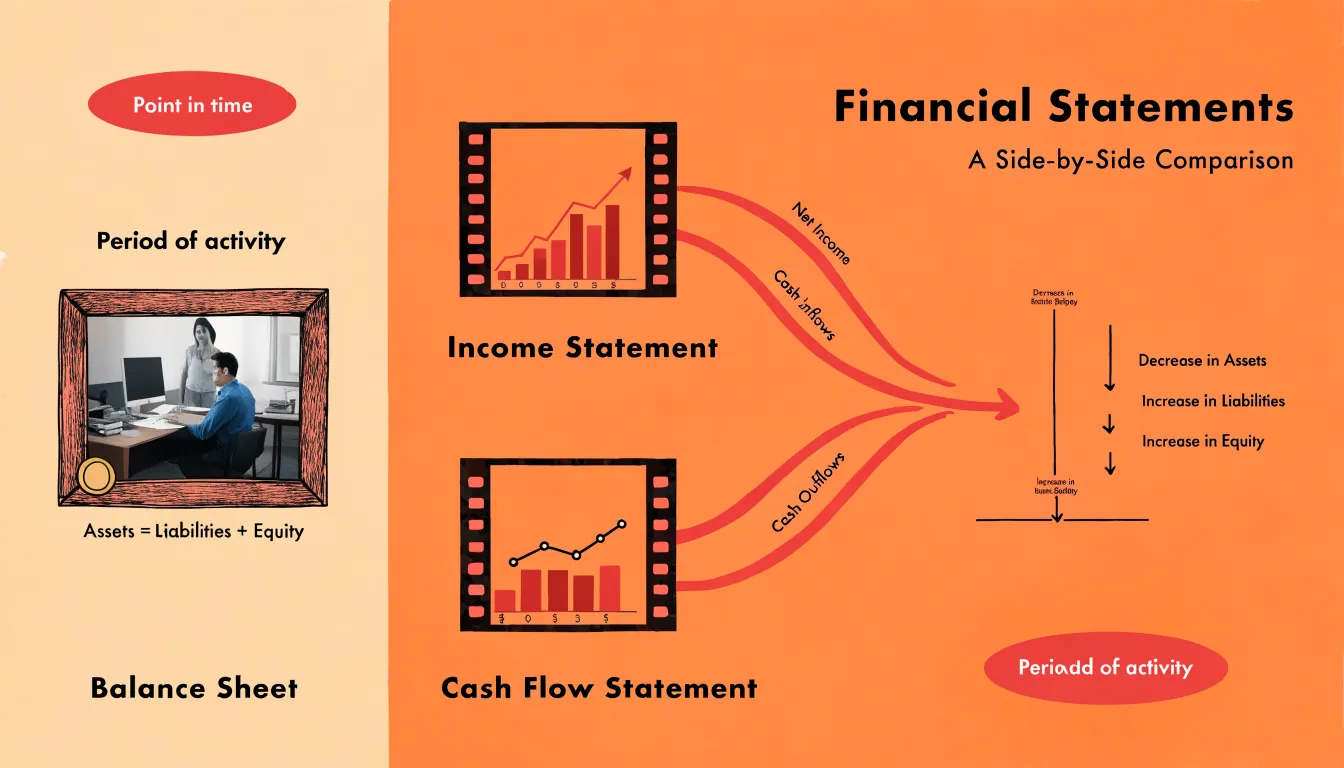
The balance sheet differs from the income statement and cash flow statement in its temporal scope and focus. The income statement reports revenues, expenses, and profits over a period, showing how the company performed during that time. It is a flow statement, measuring activity from one period to the next. The cash flow statement tracks the inflows and outflows of cash over a period, categorized into operating, investing, and financing activities. It explains changes in cash balance, which is crucial for understanding liquidity and solvency. In contrast, the balance sheet is a stock statement, a point-in-time record. It does not show how the company arrived at its current position; rather, it shows the cumulative result of all past transactions at a given instant. This distinction is vital: while the income statement and cash flow statement are like videos showing movement, the balance sheet is a photograph capturing a single frame.
Moreover, the balance sheet is interconnected with the other statements. The income statement’s net income flows into retained earnings on the balance sheet, and the cash flow statement reconciles the changes in cash and cash equivalents from one balance sheet date to the next. Understanding these linkages is key to comprehensive financial analysis. The balance sheet’s purpose is to provide a reliable foundation for assessing financial structure, liquidity, and solvency, enabling investors, creditors, and management to make informed decisions. Its unique snapshot perspective complements the period-based insights from the income statement and cash flow statement, together offering a complete view of a company’s financial story.
What are assets and how do they work
Assets are the resources a business owns or controls that are expected to provide future economic value. In essence, they are the building blocks of a company’s financial strength, representing what the business has at its disposal to generate revenue, support operations, and create long-term growth. An asset can be tangible, like machinery, or intangible, like a patent, but its defining characteristic is the potential to yield benefits beyond the current accounting period.
Assets are typically classified into two main categories: current and non-current. Current assets are those that are expected to be converted into cash, sold, or consumed within one year or within the normal operating cycle of the business. They are the liquid resources that keep day-to-day operations running smoothly. Common examples include cash and cash equivalents, accounts receivable, inventory, and short-term investments. Cash is the most liquid asset, readily available for immediate use. Inventory, such as raw materials, work-in-progress, or finished goods, represents products held for sale or used in production. Accounts receivable reflect money owed by customers for goods or services already delivered. These current assets are essential for managing cash flow, meeting short-term obligations, and seizing immediate opportunities.
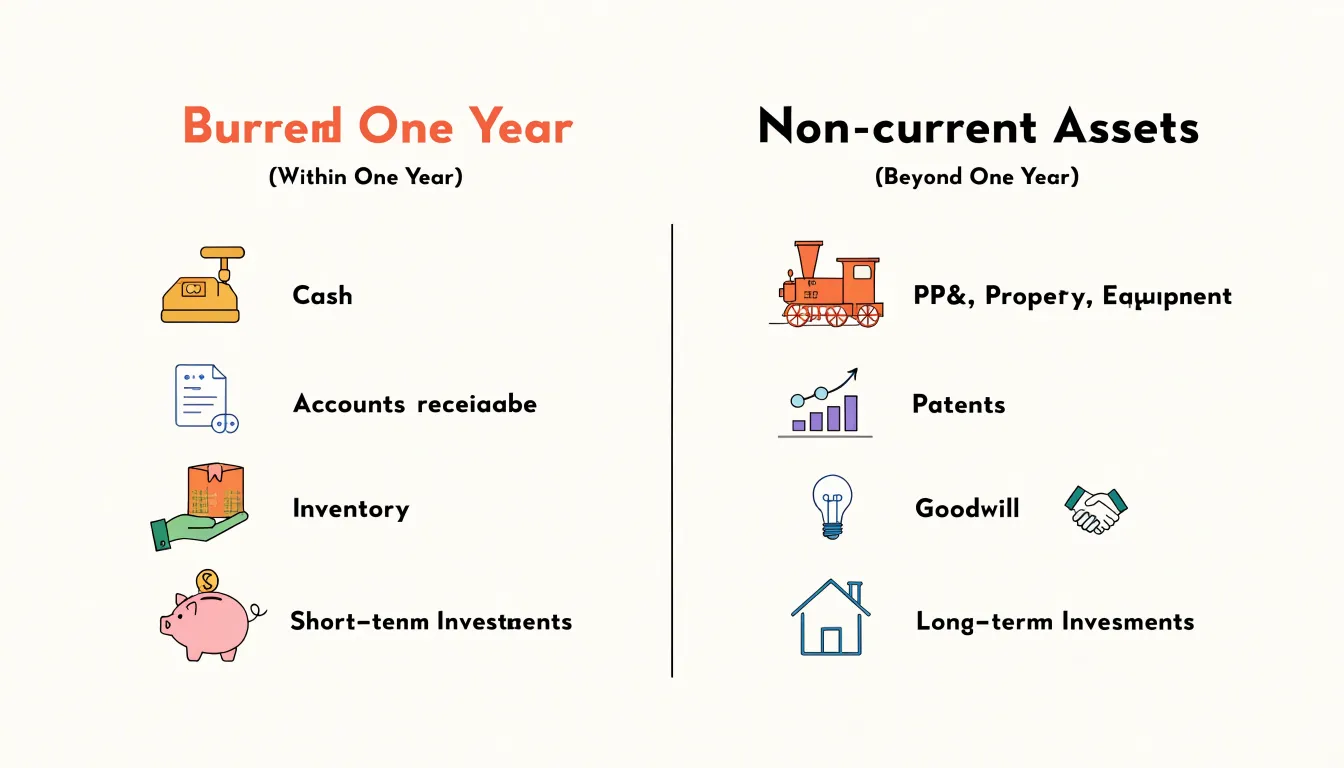
Non-current assets, also known as long-term assets, are resources that are expected to provide economic benefits for more than one year. They form the infrastructure of the business and are crucial for sustained operations and growth. Examples include property, plant, and equipment (PP&E), such as buildings, machinery, and vehicles; intangible assets like patents, trademarks, and goodwill; and long-term investments. These assets are not intended for immediate sale but are used to generate revenue over multiple periods. For instance, a manufacturing company’s equipment is a non-current asset that enables production for years, while a software company’s patents protect its intellectual property and competitive advantage.
Understanding how assets work is fundamental to assessing a company’s financial health. Assets are recorded on the balance sheet and represent the resources available to generate future cash flows. Proper management of both current and non-current assets ensures liquidity, operational efficiency, and long-term viability. By categorizing assets correctly, stakeholders can evaluate a company’s ability to meet short-term obligations and invest in growth, gaining insight into its overall financial strategy and stability.
Liabilities
Liabilities represent everything a business owes to outside parties, whether that obligation takes the form of money to be repaid or goods and services to be delivered. When a company receives value now and promises to settle up later, a liability is recorded on the balance sheet to capture that outstanding commitment. Common examples include accounts payable, which tracks amounts owed to suppliers for inventory or services already received; loans and other borrowings, where the principal must be repaid according to an agreed schedule; and accrued expenses such as wages earned by employees but not yet paid, or interest that has built up on a debt since the last payment. Each of these entries reflects a claim that others hold against the business, and together they show the financial commitments management has taken on.
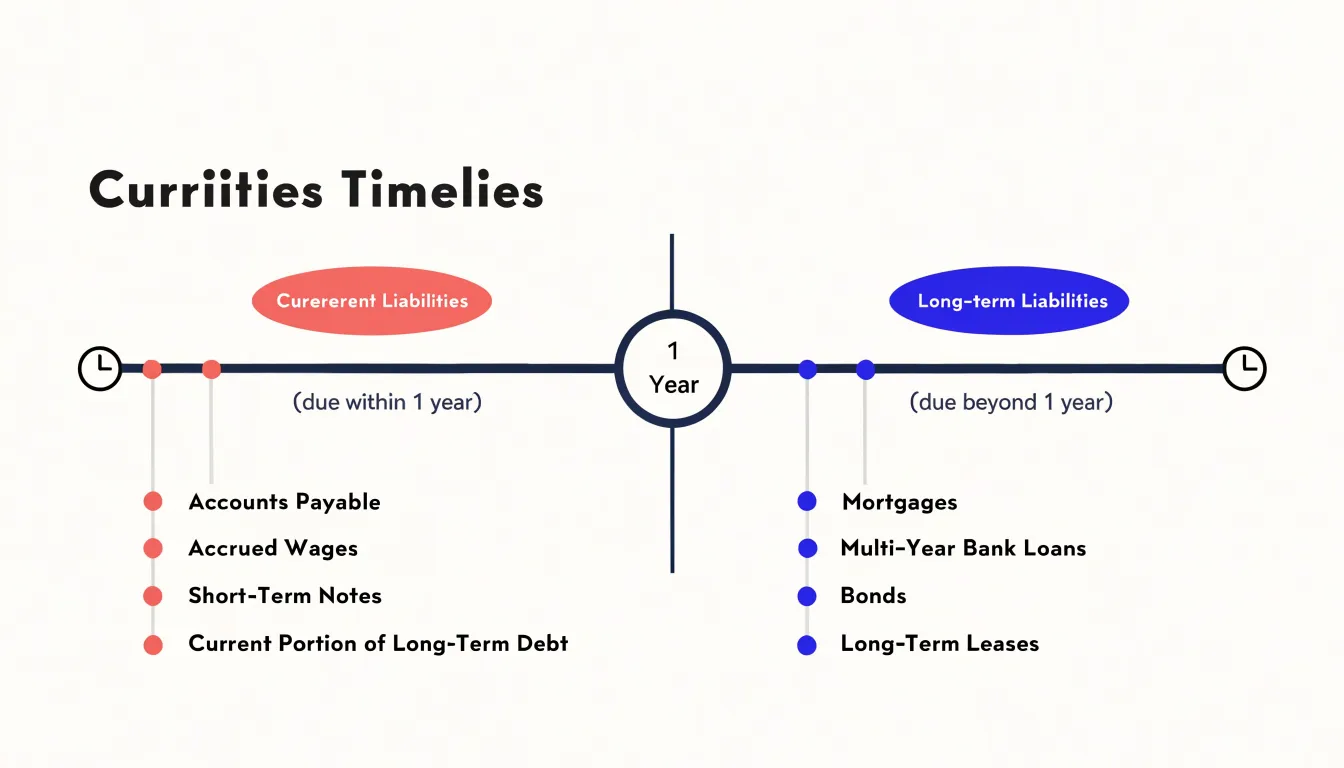
Liabilities are typically divided into two categories based on timing. Current liabilities are obligations expected to be settled within one year or within the normal operating cycle, whichever is longer. Accounts payable, short-term notes, accrued wages, and the portion of long-term debt due in the coming twelve months all fall into this group. Because they come due soon, current liabilities are closely watched alongside current assets to gauge whether a business can meet its near-term obligations. Long-term liabilities, by contrast, come due beyond that one-year window. Mortgages, multi-year bank loans, bonds, and long-term lease obligations belong here. The split matters because it tells a reader how much pressure the business faces in the short run versus how much debt it carries over the longer horizon.
Tracking liabilities carefully gives owners and managers a clear picture of their obligations and helps them plan cash flow, negotiate terms with lenders, and avoid surprises when payments come due. Lenders and investors also review the liability side of the balance sheet to assess risk, since a heavy concentration of short-term debt can signal strain even when total obligations look manageable. Recording liabilities accurately and reviewing them regularly keeps the business informed about what it owes and when payment is expected.
Defining owner equity in plain English
Owner’s equity is a fundamental concept in accounting that represents the owner’s residual interest in the assets of a business after deducting all liabilities. In plain English, it is what the business owes to its owners — the portion of the company’s total assets that truly belongs to the owner(s), free and clear of any obligations to outside parties.
To understand owner’s equity, imagine a business as a collection of assets (such as cash, inventory, equipment, and property) funded by two main sources: borrowed money (liabilities) and the owner’s own money (equity). The accounting equation captures this relationship: Assets = Liabilities + Owner’s Equity. Rearranging it, Owner’s Equity = Assets – Liabilities. This simple formula shows that equity is the residual — the amount left over for the owner after all debts are satisfied. If a business has $500,000 in assets and $300,000 in liabilities, the owner’s equity is $200,000, representing the owner’s net worth in the business.
Owner’s equity reflects two key components: the owner’s net investment and retained earnings. The owner’s net investment includes the capital the owner initially contributed plus any additional investments made over time, minus any withdrawals (draws) taken out of the business. Retained earnings, on the other hand, are the cumulative profits the business has earned and kept, rather than distributed to the owner. Together, these components show how the owner’s stake has grown through both direct investment and profitable operations.
For example, if an owner starts a business with $50,000 and later withdraws $10,000, the net investment is $40,000. If the business then earns $30,000 in profits and retains all of it, retained earnings are $30,000. The total owner’s equity becomes $70,000. This figure represents the owner’s claim on the business’s assets after accounting for liabilities and past transactions with the owner.
Owner’s equity is not a static number; it changes as the business earns profits (increasing equity), incurs losses (decreasing equity), or the owner takes draws (reducing equity). It provides a clear picture of the owner’s financial stake and the business’s ability to generate value over time.
Why the balance sheet equation must always balance
The balance sheet equation, Assets = Liabilities + Equity, is the fundamental identity that governs every financial statement. It must always balance because every transaction is recorded using double-entry bookkeeping, which ensures that for every debit there is an equal and opposite credit. This system means that the total debits always equal the total credits, and since assets are typically debited and liabilities and equity credited, the equation holds by construction.
Consider a simple illustration. A business starts with $10,000 in cash, contributed by the owner. The asset Cash increases by $10,000, and Equity (Owner’s Capital) increases by $10,000. The equation balances: Assets ($10,000) = Liabilities ($0) + Equity ($10,000). Next, the business borrows $5,000 from a bank. Cash increases by $5,000, and Liabilities (Loan Payable) increases by $5,000. Now Assets are $15,000, Liabilities $5,000, and Equity $10,000, so $15,000 = $5,000 + $10,000. Finally, the business purchases equipment for $3,000 cash. Cash decreases by $3,000, and Equipment (an asset) increases by $3,000. Total assets remain $15,000, and the equation still balances.
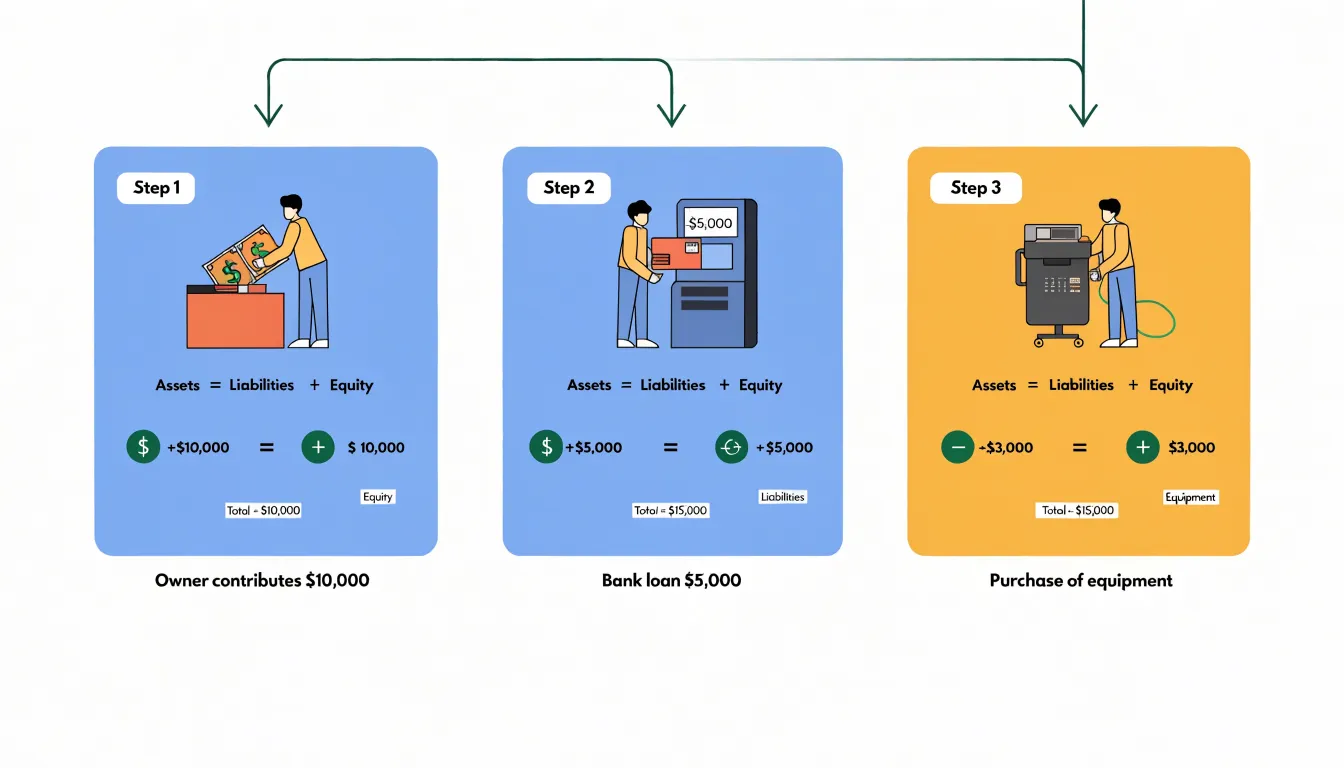
Double-entry bookkeeping guarantees this balance. Each transaction affects at least two accounts, and the accounting equation is a direct consequence of the rules of debit and credit. Any error that causes an imbalance would be detected because the trial balance would not tally. Therefore, the balance sheet always balances, reflecting the self-checking nature of the accounting system. This balance provides assurance that the financial records are internally consistent and that the reported financial position is reliable. Without this balance, the integrity of the financial statements would be compromised, and stakeholders could not trust the information presented.
Walkthrough
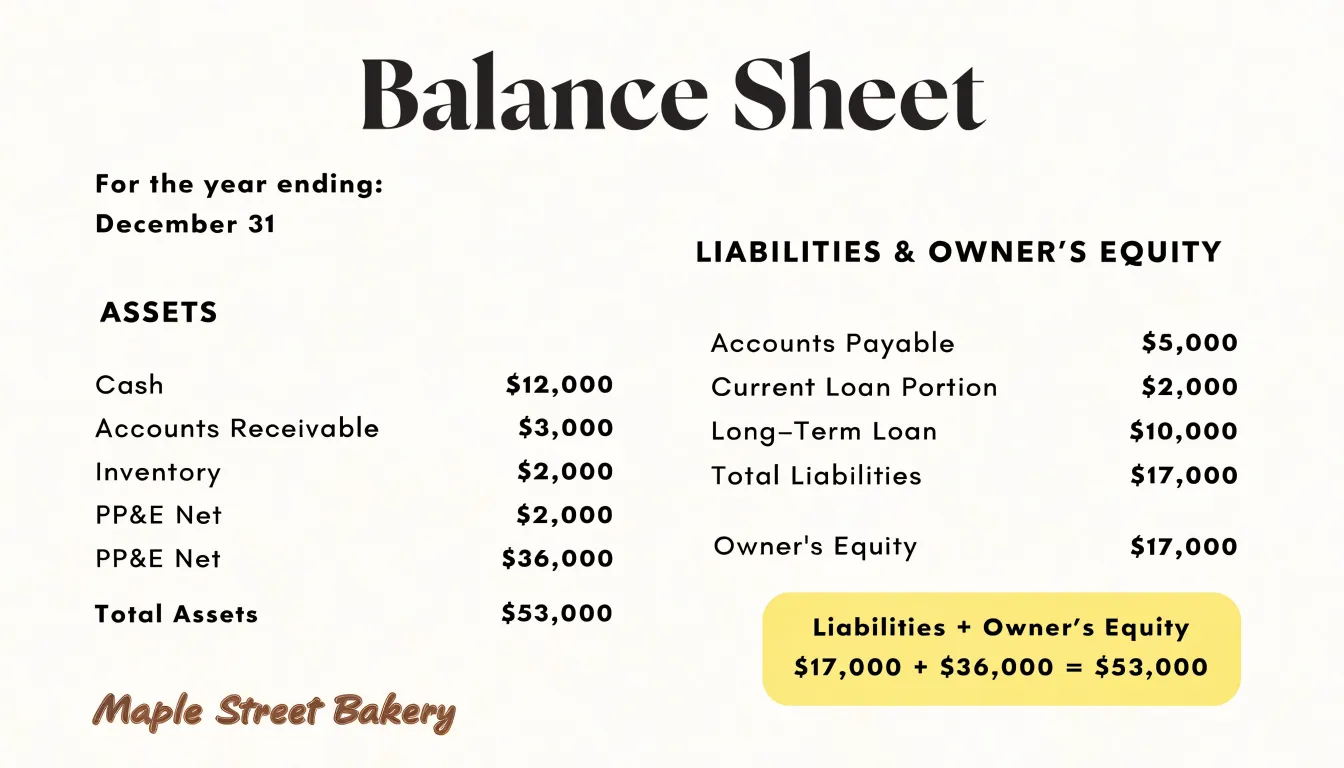
To see how a balance sheet works in practice, consider a hypothetical small business called Maple Street Bakery, a sole proprietorship owned by Dana. At the end of its first year of operation, Dana prepares a balance sheet dated December 31. The first step is to list current assets: cash in the business checking account of $12,000, accounts receivable from a few wholesale customers totaling $3,000, and inventory of flour, sugar, and other supplies valued at $2,000. Next come fixed assets: baking ovens, mixers, and display cases purchased for $40,000, less accumulated depreciation of $4,000, for a net book value of $36,000. Adding these figures gives total assets of $53,000. The second step is to list liabilities. Current liabilities include accounts payable to suppliers of $5,000 and a short-term equipment loan payment due within the year of $2,000. Long-term liabilities include the remaining balance on the equipment loan of $10,000. Total liabilities come to $17,000. The third step is to calculate equity. Dana contributed $25,000 of personal savings to start the business, and the bakery retained $11,000 of profit after owner draws. Owner’s equity therefore equals $36,000. The final step is the verification: total liabilities of $17,000 plus total equity of $36,000 equals $53,000, which matches total assets exactly. This check confirms the fundamental accounting equation, assets equal liabilities plus equity, and shows that every dollar of assets was financed either by borrowing or by the owner’s investment and retained earnings. Presenting the example in this order, assets first, then liabilities, then equity, and finally the balancing check, gives a clear, repeatable walkthrough that a small business owner can follow when assembling their own balance sheet at the close of each accounting period.
How to use a balance sheet to evaluate financial health
A balance sheet becomes a practical decision-making tool once you translate its line items into ratios that reveal how a company handles its obligations and structures its capital. The first family of metrics addresses liquidity, or the ability to meet short-term commitments. The current ratio divides current assets by current liabilities and shows how many dollars of near-term resources stand behind each dollar of near-term obligations; a result comfortably above one signals a reasonable cushion, while a figure below one suggests the company may lean on incoming cash flow or new borrowing to pay its bills. The quick ratio refines this by stripping inventory from current assets, which matters for businesses whose stock turns slowly or may be hard to convert to cash. Working capital, simply current assets minus current liabilities, gives an absolute dollar view of the same short-term buffer.
Solvency metrics shift attention to the long-term capital structure. Debt-to-equity compares total liabilities with shareholders’ equity and indicates how much of the business is financed by creditors versus owners; higher values mean greater reliance on borrowing and a thinner equity cushion to absorb losses. The equity ratio, equity divided by total assets, expresses the same idea as a proportion of the whole. Interest coverage, which divides operating earnings by interest expense, connects the balance sheet to the income statement and shows how many times over earnings can service debt payments. A declining trend in these measures often precedes trouble even when absolute debt levels look manageable.
Interpretation depends on context. Ratios should be read alongside industry norms, since capital-intensive sectors routinely carry leverage that would be alarming elsewhere, and against the company’s own history to spot deterioration or improvement. Analysts also examine the composition of assets, such as the share tied up in receivables or goodwill, because headline ratios can flatter a company whose assets are slow to convert or uncertain in value. Comparing several periods reveals whether liquidity and solvency are strengthening or eroding. Set against these benchmarks, the balance sheet supplies an early warning system and a basis for judging whether a company can fund growth, withstand a downturn, and remain stable over time.
Frequently Asked Questions
What is a balance sheet in simple terms?
A balance sheet is a snapshot of a company’s financial position at a specific moment in time. It shows what the company owns, what it owes, and the residual value belonging to shareholders.
What are current assets on a balance sheet?
Current assets are resources expected to be converted into cash, sold, or consumed within one year or within the normal operating cycle. Examples include cash and cash equivalents, accounts receivable, inventory, and short-term investments.
What is the difference between current and long-term liabilities?
Current liabilities are obligations expected to be settled within one year or within the normal operating cycle, whichever is longer. Long-term liabilities come due beyond that one-year window, such as mortgages, multi-year bank loans, bonds, and long-term lease obligations.
How do you calculate owner’s equity?
Owner’s equity is the owner’s residual interest in the assets after deducting all liabilities, calculated as Assets – Liabilities. It reflects the owner’s net investment plus retained earnings.
Why must the balance sheet equation always balance?
The equation Assets = Liabilities + Equity must always balance because every transaction is recorded using double-entry bookkeeping, with equal and opposite debits and credits. Any error causing an imbalance would be detected because the trial balance would not tally.
What ratios can I use to evaluate financial health from a balance sheet?
Liquidity metrics include the current ratio, which divides current assets by current liabilities, and the quick ratio, which strips inventory from current assets. Solvency metrics include debt-to-equity, the equity ratio, and interest coverage.