Fixed vs Variable Costs
Fixed costs stay constant regardless of usage or output—such as rent, insurance premiums, salaried payroll, and loan payments—because they are set by contract or schedule. Variable costs fluctuate with activity or consumption, including raw materials, hourly labor, utilities, groceries, and dining out. Semi-variable costs combine a fixed base fee with a usage-based component, like utility bills.
Table of Contents
- What makes an expense fixed versus variable
- Core examples of fixed monthly costs in everyday budgeting
- Common variable expenses that fluctuate based on your lifestyle
- The hidden middle ground
- Why does the distinction between cost types matter for your financial survival
- How to cut variable spending when money gets tight
- Lowering fixed expenses
- Which expense type should you focus on first when creating a budget
What makes an expense fixed versus variable
Classifying an expense as fixed or variable rests on three core criteria, and understanding each one clarifies where most business costs belong. The first is predictability: a fixed expense tends to arrive in the same amount on a regular schedule, which makes it straightforward to forecast and budget for. Rent, insurance premiums, and salaried payroll are classic examples, because the figure on the invoice rarely moves from one period to the next. The second criterion is contractual obligation. Fixed costs are frequently locked in by an agreement, such as a lease or a service contract, which means the business owes the amount regardless of how much it produces or sells. This obligation persists through slow months and busy ones alike. The third criterion concerns the driver of the amount. When the cost changes with usage or with the passage of time, it behaves as a variable expense. Raw materials, hourly labor, and shipping charges rise and fall with output, while some costs scale with time rather than volume.
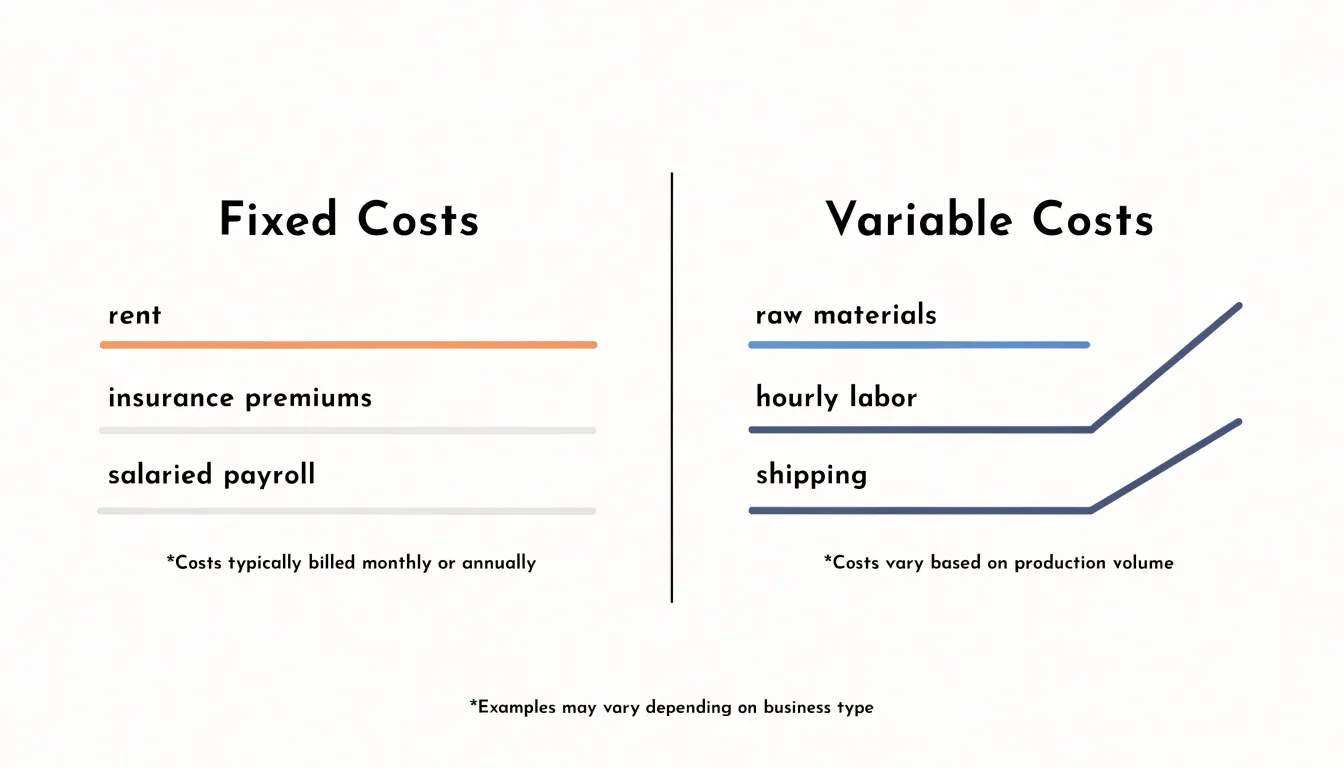
Many expenses blur the line, and the practical approach is to examine the underlying structure rather than the label. A utility bill, for instance, often combines a fixed service charge with a usage-based component. Splitting the bill into those two parts gives a more accurate picture than assigning the whole amount to one category. Consider how the cost behaves across a range of activity levels. If the invoice stays the same whether the business sells one hundred units or one thousand, the cost is fixed within that range. If it rises in step with each additional unit, it is variable.
Some costs sit in a middle zone that accountants call mixed or semi-variable, and these deserve separate treatment rather than forced classification. The time horizon also matters: over a short window, a lease may be inescapable and therefore fixed, while over several years the business can renegotiate or relocate, which introduces flexibility. Reviewing each expense against these tests, and revisiting the classification as contracts renew and operations change, keeps the cost structure visible and supports sound decisions about pricing, break-even points, and capacity planning.
Core examples of fixed monthly costs in everyday budgeting
Fixed monthly costs form the predictable backbone of a household budget, and recognizing them is the first step toward financial stability. The most familiar example is housing: whether you rent an apartment or carry a mortgage, the amount due each month is set by a lease or loan agreement. A lease locks in a rent figure for its full term, and a fixed-rate mortgage sets a stable principal-and-interest payment for years. Because the terms are contractual, the payment does not rise or fall with how much electricity you use or how often you cook at home.
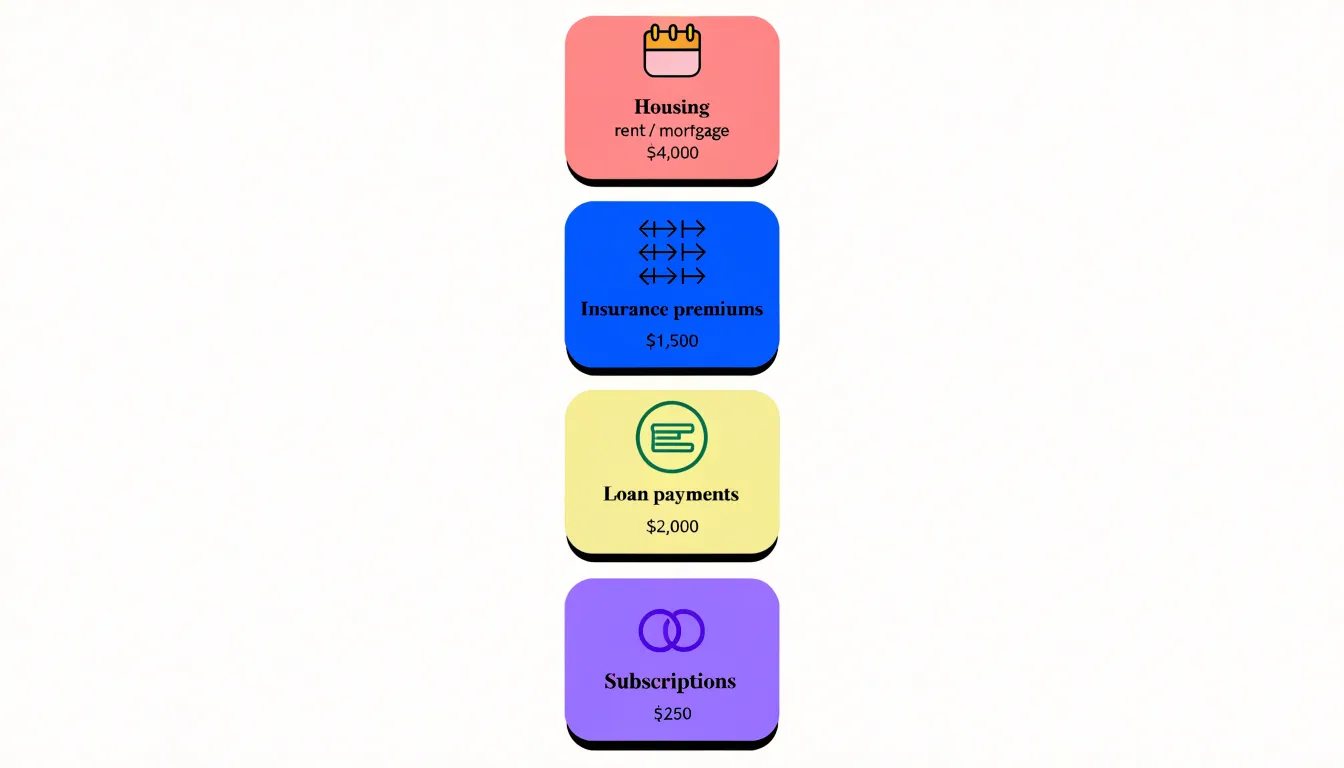
Insurance premiums behave the same way. Auto, renters, and homeowners policies are typically billed at a flat monthly or annual rate determined when the policy is issued. The insurer calculates the premium from factors like your coverage level, deductible, and claims history, then charges that amount consistently. As long as the policy terms stay unchanged, the bill arrives at the same figure each period.
Loan payments are another staple of fixed expenses. Installment loans for a car, a personal loan, or student debt come with a repayment schedule that divides principal and interest into equal monthly installments. The lender sets the schedule at origination, so the payment amount is identical every month until the balance is cleared. This predictability lets borrowers plan around a known obligation.
Subscription services round out the category. Streaming platforms, gym memberships, software plans, and cloud storage typically charge a recurring flat fee, often monthly or annually. The provider sets the price for the service tier, and the charge repeats automatically until you cancel or the provider announces a rate change. Like the other examples, the cost is tied to an agreement rather than to consumption levels.
What unites these expenses is their independence from usage. Rent, premiums, loan installments, and subscriptions are agreed in advance and billed on a schedule, so they remain constant month to month. That constancy is what makes them fixed, and it is what allows a budgeter to forecast a large share of monthly outflows with confidence.
Common variable expenses that fluctuate based on your lifestyle
Variable expenses form the flexible portion of a household budget, and the everyday categories within this group are where month-to-month swings most visibly occur. Groceries offer a clear example: a household that cooks at home most nights will spend a predictable amount on staple ingredients, while a month filled with social gatherings, holiday meals, or spontaneous takeout orders can push the food bill noticeably higher. Dining out behaves the same way, since the frequency of restaurant meals, coffee runs, and casual lunches tracks directly with how often a person chooses convenience over cooking.
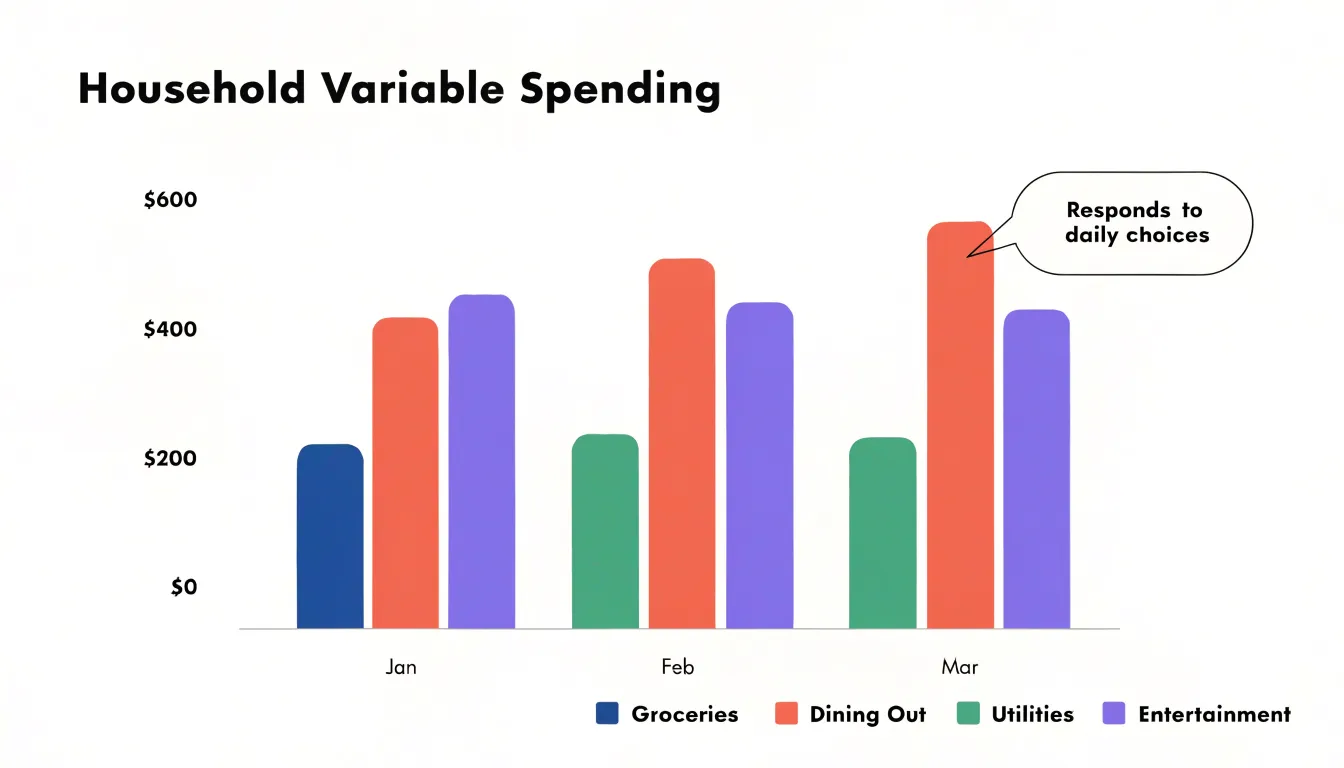
Utilities also shift with habits and seasons. Heating and cooling costs rise when someone adjusts the thermostat frequently, leaves windows open while the air conditioning runs, or works from home during extreme weather. Water and electricity usage climb with longer showers, extra laundry loads, and appliances left running. Gas spending follows the same logic, reflecting daily commute distance, errand frequency, and discretionary road trips rather than any fixed baseline.
Entertainment is perhaps the most habit-driven category of all. Streaming subscriptions, movie tickets, concert outings, hobbies, and weekend activities expand or contract according to personal priorities and social calendars. A person who redirects leisure spending toward free community events in a tight month will see this line item shrink dramatically, while a month packed with celebrations and nights out will inflate it.
The common thread across all these expenses is that they respond to daily choices rather than contractual obligations. Because of this responsiveness, tracking them reveals patterns that a fixed-cost review cannot: which weeks spending spikes, which habits correlate with higher totals, and where small behavioral adjustments produce meaningful savings. Someone who reviews three months of grocery and dining receipts can often spot recurring overspending tied to specific routines, such as weekday lunches purchased at work or weekend grocery runs that include impulse buys. Understanding how personal habits drive these fluctuations gives households a practical lever for managing the flexible side of their budget without disrupting the costs they cannot easily change.
The hidden middle ground
Semi-variable costs occupy a middle position on the spectrum between purely fixed and purely variable expenses. These are costs that contain both elements at once: a fixed base amount you pay regardless of activity, plus a variable portion that rises or falls with usage. Utility bills are the classic example. A household pays a connection or service fee every month no matter how much electricity it consumes, and then pays additional charges for each unit of power used beyond that baseline. Phone plans work the same way, with a flat monthly rate covering a set allowance of data and per-gigabyte overage charges applying once usage exceeds it. Many business expenses follow this pattern as well, such as a software subscription with a base license fee plus per-seat charges, or a delivery service with a flat monthly retainer plus mileage costs.
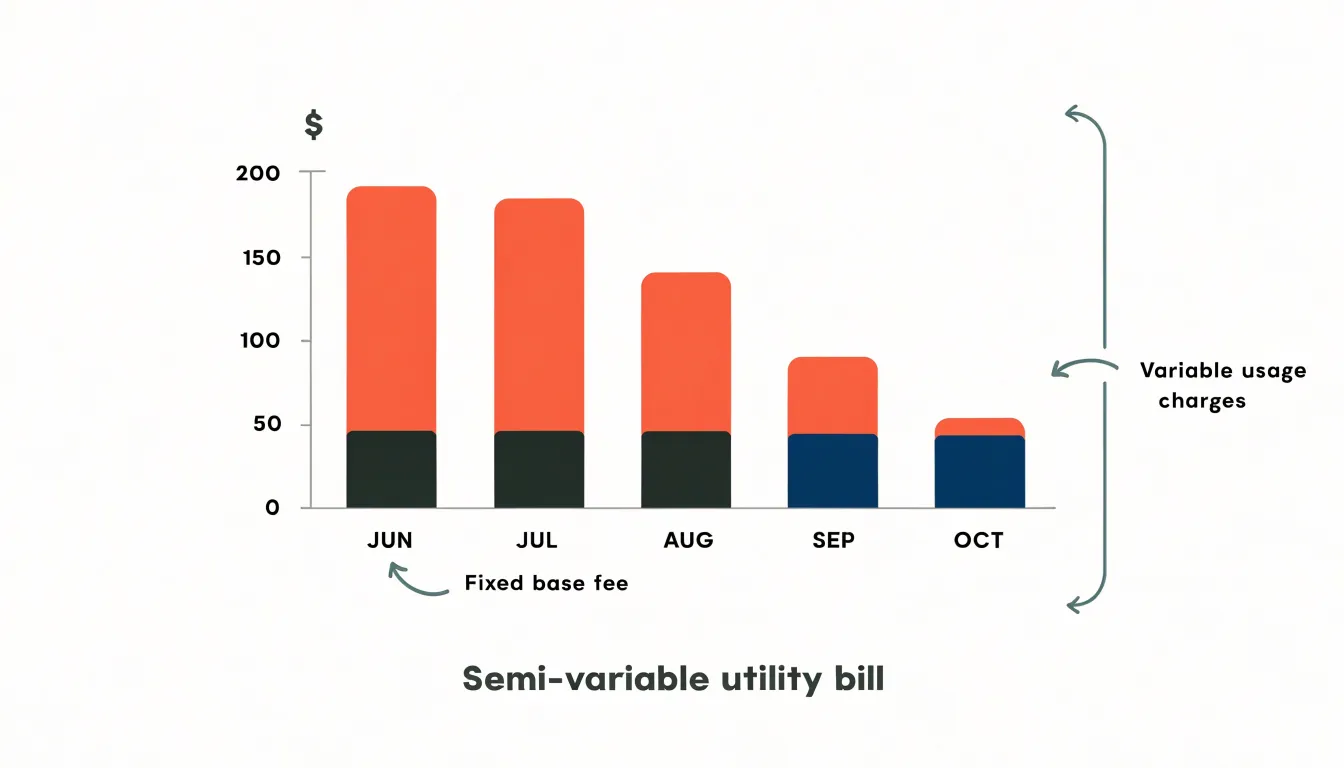
For budgeting purposes, semi-variable costs require a two-part approach. The fixed base is easy to plan for because it repeats predictably each period; you can enter it into a budget as a known obligation. The variable component needs forecasting based on historical patterns. Reviewing several months or a full year of past bills reveals the typical range of usage and helps you estimate a realistic average for the variable portion. Setting the budget at that average gives a reasonable working figure, while tracking actual costs against it each month keeps the estimate honest as seasons or habits change.
A practical technique is to budget for the higher end of the expected range rather than the lowest observed bill. Because the variable component can spike during peak months, such as summer air conditioning or a heavy travel period, budgeting conservatively builds in a buffer that absorbs those peaks without derailing the rest of the plan. Any surplus in low-usage months can then be redirected toward savings or other priorities. Separating the fixed and variable portions in your records also makes it easier to see which part is driving changes: a rising bill might reflect a rate increase on the base fee, or it might simply be seasonal usage, and distinguishing between the two informs better decisions. Some people also look for ways to convert part of the variable component into a fixed one, such as choosing an unlimited plan, which trades potential savings in low months for predictability.
Why does the distinction between cost types matter for your financial survival
The distinction between fixed and variable costs matters most when money gets tight, because it determines what you can actually control. Fixed costs such as rent, loan payments, insurance premiums, and subscription contracts stay the same regardless of how much you sell, produce, or earn in a given month. They are locked in by agreement and often by penalty. Variable costs such as raw materials, hourly labor, utilities, shipping, and sales commissions rise and fall with activity. When revenue drops, variable costs tend to shrink on their own; fixed costs do not. That asymmetry is the heart of financial survival.
Cash flow forecasting improves dramatically once costs are split this way. To project next month’s cash position, you need to know the floor beneath your spending: how much leaves the account no matter what happens. Fixed costs form that floor. Variable costs can then be modeled against expected activity levels, using ranges rather than single numbers. A forecast built on this structure shows you the minimum cash you need to stay open or stay afloat, and it shows how much breathing room exists if sales come in below plan.
Emergency fund sizing depends on the same logic. A common rule of thumb is to hold three to six months of expenses, but the meaningful figure is three to six months of fixed costs, plus a buffer for essential variable spending like food and fuel. A business or household with low fixed costs can survive a short income gap with a smaller reserve. One carrying heavy fixed obligations needs a larger cushion, because those payments continue even when income stops.
Resilience during income loss or economic downturns follows directly. People and businesses that know their fixed versus variable split can act quickly, cutting discretionary variable spending first and renegotiating or restructuring fixed commitments second. They can see how long their reserves will last at current burn rates and make decisions before a crisis forces them. Those who treat all costs as one undifferentiated lump tend to discover the fixed floor only when cash runs out. Knowing the split turns cost awareness into a practical survival tool.
How to cut variable spending when money gets tight
When money gets tight, variable spending is often the first place to look for savings because it can be adjusted quickly. Variable costs are those that change from month to month based on your choices—things like groceries, dining out, entertainment, and discretionary purchases. By targeting these areas, you can reduce your outflow without drastic lifestyle changes. One practical tactic is to set spending caps for specific categories. For example, decide that you will spend no more than $200 on groceries per week and $50 on entertainment per month. These caps create clear boundaries and make it easier to track your spending. Another effective method is the cash envelope system. Withdraw a set amount of cash for each discretionary category and use only that cash for purchases. When the envelope is empty, you stop spending in that category. This physical limitation can be surprisingly powerful in curbing impulse buys. Meal planning is another simple yet impactful strategy. By planning your meals for the week and shopping with a list, you can avoid expensive last-minute takeout and reduce food waste. You can also plan for leftovers and use them for lunches, further cutting costs. Finally, don’t overlook the power of negotiation on discretionary purchases. Many recurring expenses like cable bills, phone plans, or gym memberships can be renegotiated or switched to cheaper alternatives. A simple phone call to your provider asking for a better rate or exploring competitor offers can yield immediate savings. When combined, these tactics can quickly reduce your variable spending and free up cash for more essential needs.
Lowering fixed expenses
Fixed expenses form the stable backbone of a budget, and because they recur month after month, any reduction achieved here compounds over time. Long-term contract negotiations offer one of the most durable ways to lower this category of cost. Refinancing loans stands out as a high-impact strategy: when interest rates drop or a borrower’s credit profile improves, renegotiating the terms of a mortgage, auto loan, or business credit facility can shave hundreds of dollars from monthly obligations. The key is to approach lenders with competing offers in hand and to ask explicitly about closing costs so that the savings are genuine rather than offset by fees.
Insurance represents another fertile ground. Premiums for home, auto, and liability coverage drift upward quietly, and many policyholders renew year after year without comparison shopping. Requesting quotes from several providers and presenting a lower bid to the current insurer often yields a meaningful discount, particularly when coverage levels are reviewed alongside price. Rent is similarly negotiable, especially for tenants with a strong payment history who are willing to commit to a longer lease. Landlords value reliable occupancy, and a well-timed conversation before renewal can secure a rent freeze or a modest reduction in exchange for certainty.
Subscription services deserve special attention because their costs are small individually yet add up quickly. Timing cancellations matters: cancelling just before a renewal date avoids paying for another cycle, and many providers offer retention discounts when a customer signals intent to leave. Tracking renewal dates and negotiating at those moments locks in savings that persist for as long as the service is used.
The common thread across these approaches is preparation. Gather documentation, know the going market rate, and frame requests around mutual benefit. Negotiations conducted from an informed position tend to produce permanent reductions rather than temporary discounts, and each success frees up cash flow that can be redirected toward debt reduction or savings goals.
Which expense type should you focus on first when creating a budget
When you sit down to build a budget, the order in which you address your expenses matters a great deal. Start with fixed costs, because these are the commitments that define the shape of your financial life. Rent or mortgage payments, insurance premiums, loan installments, subscription plans, and utility base rates all recur month after month with little variation. Because they are locked in, they set the floor beneath your spending, and every dollar you remove from a fixed cost stays removed in every future month. Negotiating a lower insurance premium, refinancing a loan, or canceling an unused subscription produces a structural saving that compounds over the year. A hundred dollars trimmed from a fixed monthly expense frees twelve hundred dollars annually without requiring any further effort, which is why fixed costs deserve your first and most careful attention. Review each contract and recurring charge, ask whether it still serves its purpose, and negotiate wherever there is room to do so.
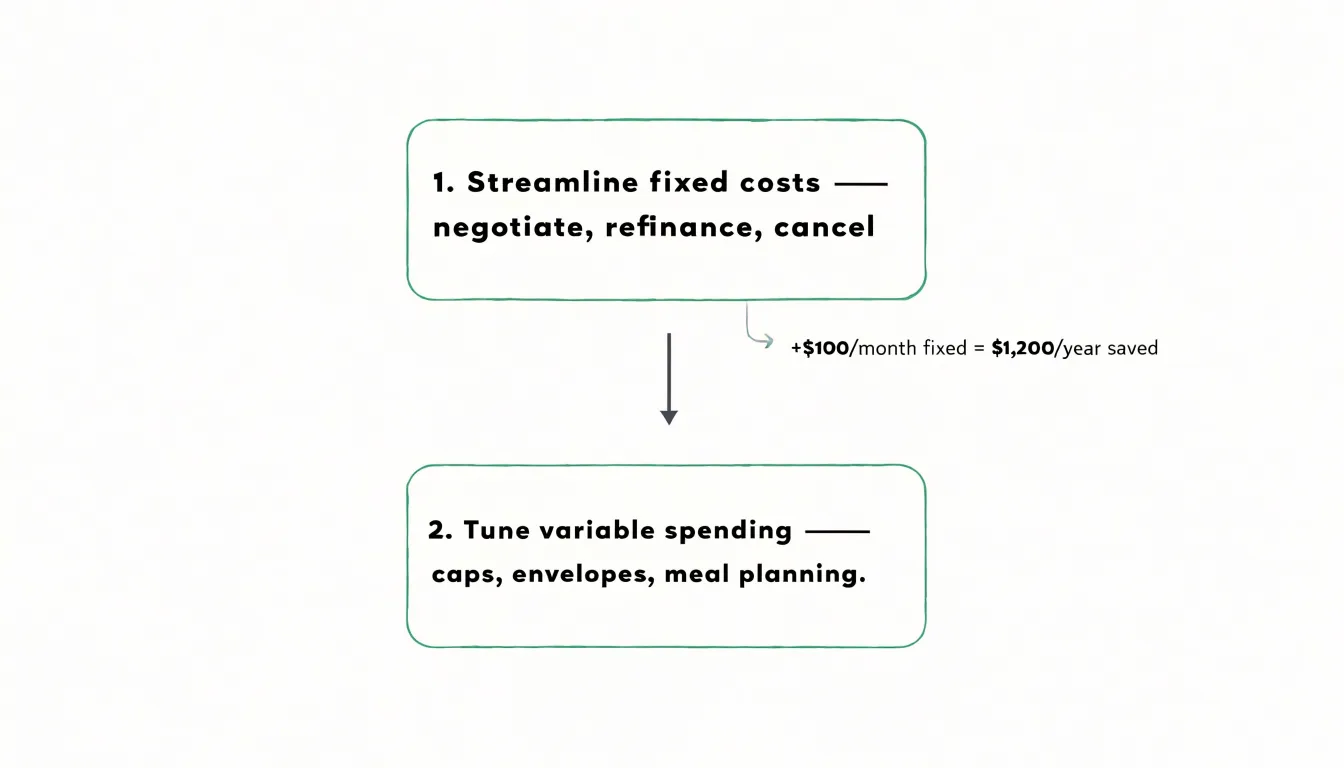
Once fixed costs are streamlined, turn to variable spending. Groceries, dining out, entertainment, fuel, and discretionary purchases fluctuate from week to week, which makes them the flexible lever for short-term adjustments. Variable costs respond quickly to changes in behavior, so they are the right place to look when an unexpected expense arrives or when you need to recover from a month of overspending. Cutting back on restaurant meals or delaying a purchase can free up cash within days rather than months. The trade-off is that these savings are reversible; spending tends to creep back unless you track it. Used deliberately, however, variable spending gives you room to maneuver without dismantling the structure of your finances.
Working in this sequence keeps the effort proportional to the payoff. Structural changes take time to negotiate and set up, yet they deliver permanent relief. Behavioral changes are fast and reversible, so they suit temporary pressures. Address the rigid commitments first, then use the flexible categories as your tuning mechanism, and your budget gains both a stable foundation and the agility to respond to whatever the month brings.
Frequently Asked Questions
What’s the difference between fixed and variable costs?
Fixed costs tend to be predictable, often contractual, and stay the same regardless of production or sales; variable costs change with usage or output. Examples of fixed costs include rent, insurance premiums, and salaried payroll, while raw materials, hourly labor, and shipping charges are variable.
What are examples of fixed monthly expenses, and how can I reduce them?
Common fixed monthly costs include rent or mortgage payments, insurance premiums, loan installments, and subscription services. To lower them, refinance loans, compare insurance quotes, negotiate rent, and time subscription cancellations before renewal; the article notes fixed costs are locked in by agreement and often by penalty.
What variable expenses can I cut when money gets tight?
When money is tight, variable expenses such as groceries, dining out, entertainment, and discretionary purchases are often the first place to look because they can be adjusted quickly. The article suggests spending caps, the cash envelope system, meal planning with a list, and negotiating discretionary bills like cable, phone, or gym memberships.
What are semi-variable costs, and how should I budget for them?
A semi-variable cost has a fixed base amount plus a variable portion that rises or falls with usage, such as a utility bill with a service fee and usage charges or a phone plan with a data allowance and overage charges. Budget the fixed base as a known obligation and forecast the variable part from past bills, ideally budgeting toward the higher end of the expected range.
Why does the fixed vs. variable split matter when money gets tight?
Splitting costs this way shows the fixed floor beneath spending and helps you forecast cash flow and size an emergency fund. Fixed costs stay the same when income drops, while variable costs tend to shrink, so reserves are often based on three to six months of fixed costs plus a buffer for essential variable spending.
Should I focus on fixed or variable costs first when creating a budget?
Start with fixed costs because they define the floor beneath your spending, and reductions there can produce structural savings that compound over the year. After fixed costs are streamlined, turn to variable spending for faster, reversible adjustments when an unexpected expense arrives or you need to recover from overspending.