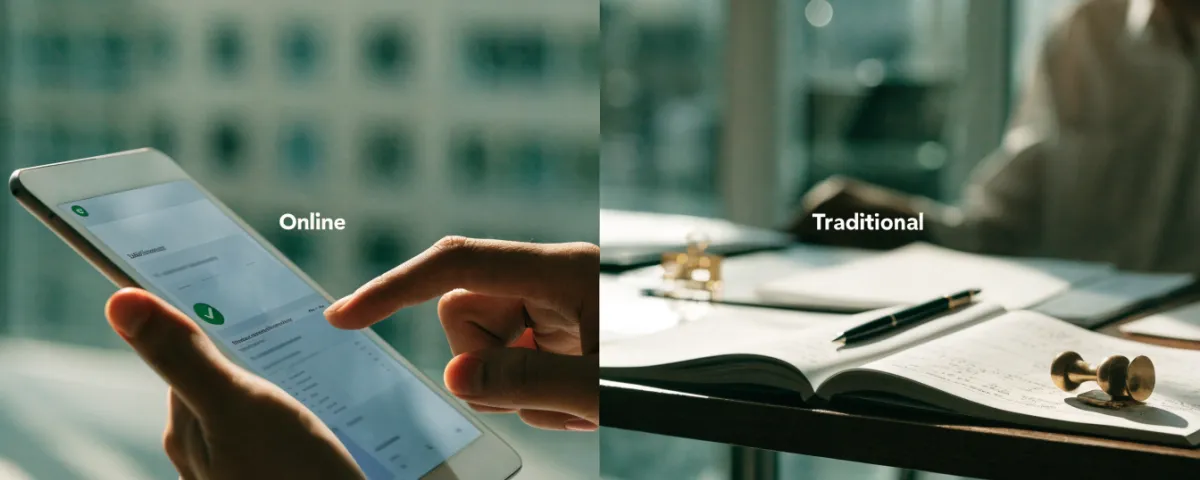
Online vs Traditional Business Banking
Online business banking handles routine payments, transfers, and check deposits through an app with real-time balances and accounting software integrations, while traditional banks provide branch access for cash deposits, wire transfers, and in-person support. Most businesses blend both: a digital account for fast daily transactions and a traditional relationship for cash handling and lending.
Table of Contents
- How digital banks and traditional branches handle daily business operations differently
- Key advantages of online business banking for remote teams and low overhead
- Where digital business accounts fall short with physical cash and wire transfers
- Why established brick and mortar institutions still lead in relationship lending
- Hidden costs to watch out for
- How do security measures and fraud protections compare across both options
- Choosing the right fit based on your business model and payment habits
- The hybrid approach
How digital banks and traditional branches handle daily business operations differently
The day-to-day rhythm of running a business looks noticeably different depending on whether the account sits with a digital-first bank or a traditional branch-based institution. With a digital bank, routine money movement happens inside an app. A check that arrives from a client can be photographed and deposited from the office, a warehouse, or a trade show floor, with funds typically available within a business day or two depending on the amount. Transfers between internal accounts or to external payees are usually instant or same-day, and scheduled payments to suppliers can be set up once and repeated automatically. Account balances, pending transactions, and statements are visible in real time, which makes reconciliation at month-end a matter of exporting a file rather than waiting on a mailed statement.
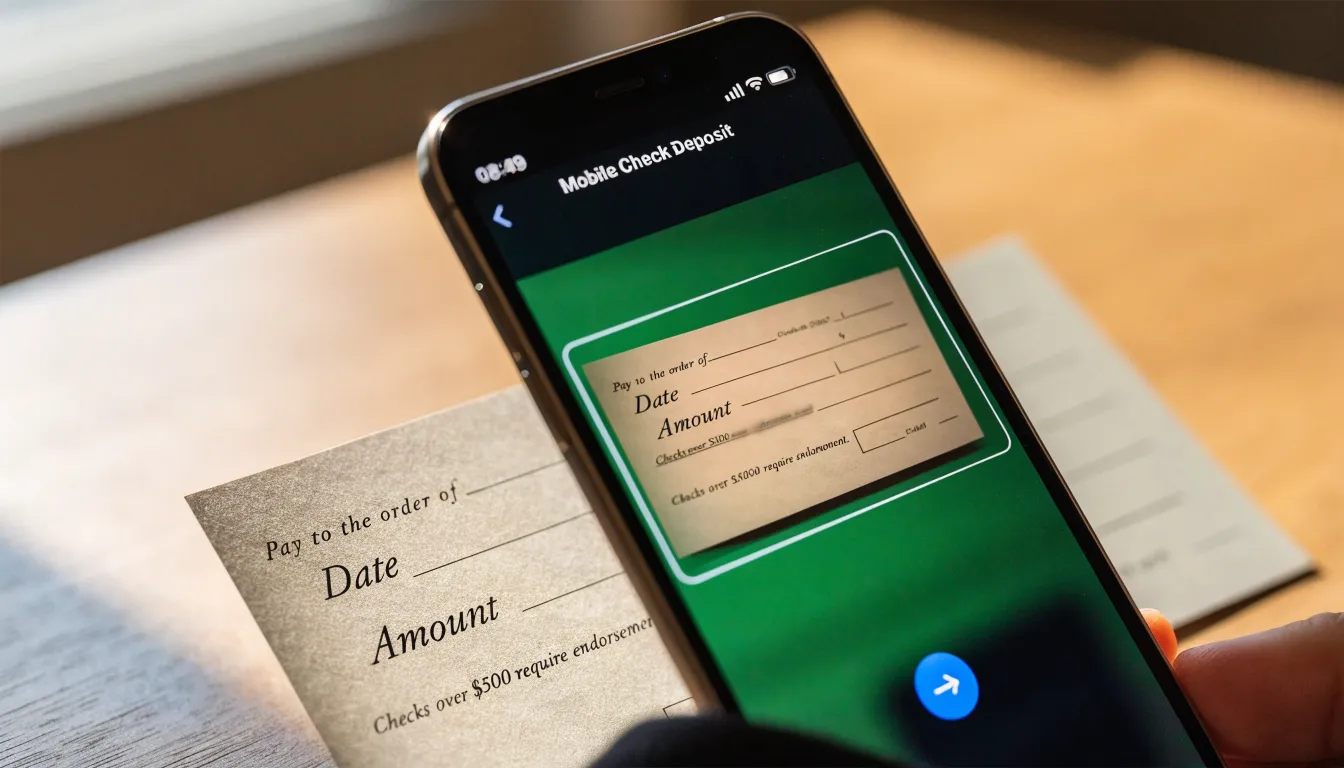
Traditional banks structure daily operations around the branch and the relationship manager. Depositing checks often means a trip to a teller or an ATM that accepts business deposits, and cash deposits are a routine errand for retail, food service, and other cash-heavy businesses. Handling coin, processing petty cash, and obtaining counter withdrawals are all services a branch provides in person. When something goes wrong — a hold on a large deposit, a disputed charge, a wire that needs to be released quickly — the branch offers a face-to-face escalation path. Business customers with a dedicated banker can call or visit to walk through paperwork, arrange a line of credit, or get signatures verified on the spot.

The practical trade-offs show up in staffing and timing. Digital accounts reduce the need for someone to leave the workplace during banking hours, and they extend the window for initiating payments into the evening. Traditional branches concentrate cash services, notary and signature guarantees, and in-person problem solving into defined hours, which can be a constraint for owners who are on the floor or on the road all day. Many businesses end up blending the two, keeping a digital account for fast transfers and a branch relationship for cash and complex needs, and the fit depends on how much physical currency and hands-on support the operation actually requires.
Key advantages of online business banking for remote teams and low overhead
Online business banking has become a natural fit for remote teams and lean operations, largely because its cost structure and accessibility align with how modern businesses actually work. One of the most immediate advantages is the absence of monthly fees. Traditional banks often bundle maintenance charges, minimum balance requirements, and transaction fees into business accounts, which adds a fixed cost that lean operations must absorb whether or not they use the services. Online banks typically strip away these recurring charges, allowing a small or distributed team to keep more capital available for growth, hiring, or product development. For a business running on tight margins, avoiding a predictable monthly drain can meaningfully improve cash flow.
Account opening is another area where online banks simplify operations. Remote teams rarely have the time or proximity for in-person branch visits, and traditional onboarding can involve paperwork, appointments, and waiting periods. Online banks streamline this process through digital applications, often allowing a business to submit documentation and receive approval within days or even hours. This speed matters for startups and lean teams that need to start accepting payments or paying suppliers quickly, without the friction of geographic constraints.
Seamless integrations with accounting software round out the operational advantages. Online banking platforms are built as digital products first, which means they frequently offer direct connections to tools like QuickBooks, Xero, or similar systems. Transactions can sync automatically, reducing manual data entry and lowering the risk of reconciliation errors. For remote teams that rely on cloud-based workflows, this integration keeps financial data consistent across the organization and saves hours of administrative effort each month.
Finally, 24/7 access from anywhere is a core benefit for distributed teams. Members can check balances, transfer funds, approve payments, and manage accounts across time zones without being tied to branch hours. This flexibility supports lean operations by enabling faster decision-making and reducing the need for dedicated administrative staff to handle routine banking tasks. Together, these features make online banks a practical choice for remote, cost-conscious businesses.
Where digital business accounts fall short with physical cash and wire transfers
Digital business accounts have transformed how many companies manage their finances, offering convenience and real-time visibility. Yet for all their strengths, online-only accounts still fall short when it comes to physical cash and wire transfers, creating practical hurdles that traditional banks often handle more smoothly.
One of the most immediate limitations is the inability to deposit cash. Many online-only business accounts do not accept cash deposits at all, or they require customers to use third-party ATM networks that may charge fees and have low deposit limits. For businesses that routinely handle cash—such as retail shops, restaurants, or service providers—this means either maintaining a separate traditional account for cash or making frequent trips to a physical branch, defeating the purpose of going digital. The lack of a straightforward cash deposit option can also complicate bookkeeping, as funds may be delayed or split across multiple accounts.
Wire transfers present another area where online-only accounts can fall short. While digital banks often advertise low or no fees for domestic transfers, international wire transfers frequently come with higher and less predictable costs. These fees can vary based on the destination country, the currency involved, and the amount being sent, making it difficult for businesses to budget accurately. In contrast, traditional banks may offer more transparent fee structures for wire transfers, especially for business customers with established relationships. Additionally, online-only accounts may lack the ability to initiate or receive certain types of wires, such as those requiring physical documentation or specialized handling.
Perhaps the most significant gap is the absence of in-person support for complex transactions. When a wire transfer goes astray, a cash deposit is disputed, or a large transaction requires special authorization, having a knowledgeable representative to speak with in person can be invaluable. Online-only accounts typically rely on chat or phone support, which may be sufficient for routine inquiries but can feel inadequate when time-sensitive or high-value issues arise. The lack of a physical branch also means no one to hand a check to or to verify identity documents face-to-face, adding friction to transactions that require extra verification.
For businesses with straightforward digital needs, these limitations may be minor. However, for those that regularly deal with cash or complex wire transfers, the shortcomings of online-only accounts can translate into higher costs, delayed funds, and added administrative burden.
Why established brick and mortar institutions still lead in relationship lending
Established brick-and-mortar banks maintain a significant advantage in relationship lending, particularly for small businesses seeking customized financing. This advantage stems from their deep local presence and the personal connections they cultivate with clients over time. Traditional banks often have branch managers and loan officers who live in the same communities as their business customers, enabling them to understand local market conditions, industry nuances, and the unique challenges faced by area enterprises. These in-person interactions foster trust and allow bankers to assess character and business viability beyond raw financial statements.
When small businesses require customized loans or lines of credit, traditional banks can leverage this local knowledge to offer more flexible terms. For instance, a loan officer who has visited a retailer’s storefront, met the owner, and observed operations firsthand can better evaluate the business’s potential and structure a loan that aligns with seasonal cash flow patterns or growth plans. This personalized approach often results in tailored solutions such as flexible repayment schedules, adjustable interest rates, or collateral arrangements that accommodate the specific needs of the business. Online banks, by contrast, typically rely on standardized algorithms and credit scoring models, which may not capture the full picture of a small business’s circumstances.

Moreover, traditional banks benefit from long-standing relationships with local professionals, such as accountants, attorneys, and real estate agents, who can provide additional context and referrals. This network effect enhances the bank’s ability to assess risk and offer competitive terms. Small business owners frequently value the ability to sit down with a banker, discuss their goals, and receive advice that goes beyond the loan itself. Such interactions build loyalty and encourage ongoing dialogue, which can lead to more favorable terms as the relationship deepens.
In essence, the local presence and personal relationships inherent in traditional banking enable a level of customization and flexibility that is difficult for purely online institutions to replicate. For small businesses that need financing tailored to their unique circumstances, the human touch and community insight of brick-and-mortar banks remain compelling advantages.
Hidden costs to watch out for
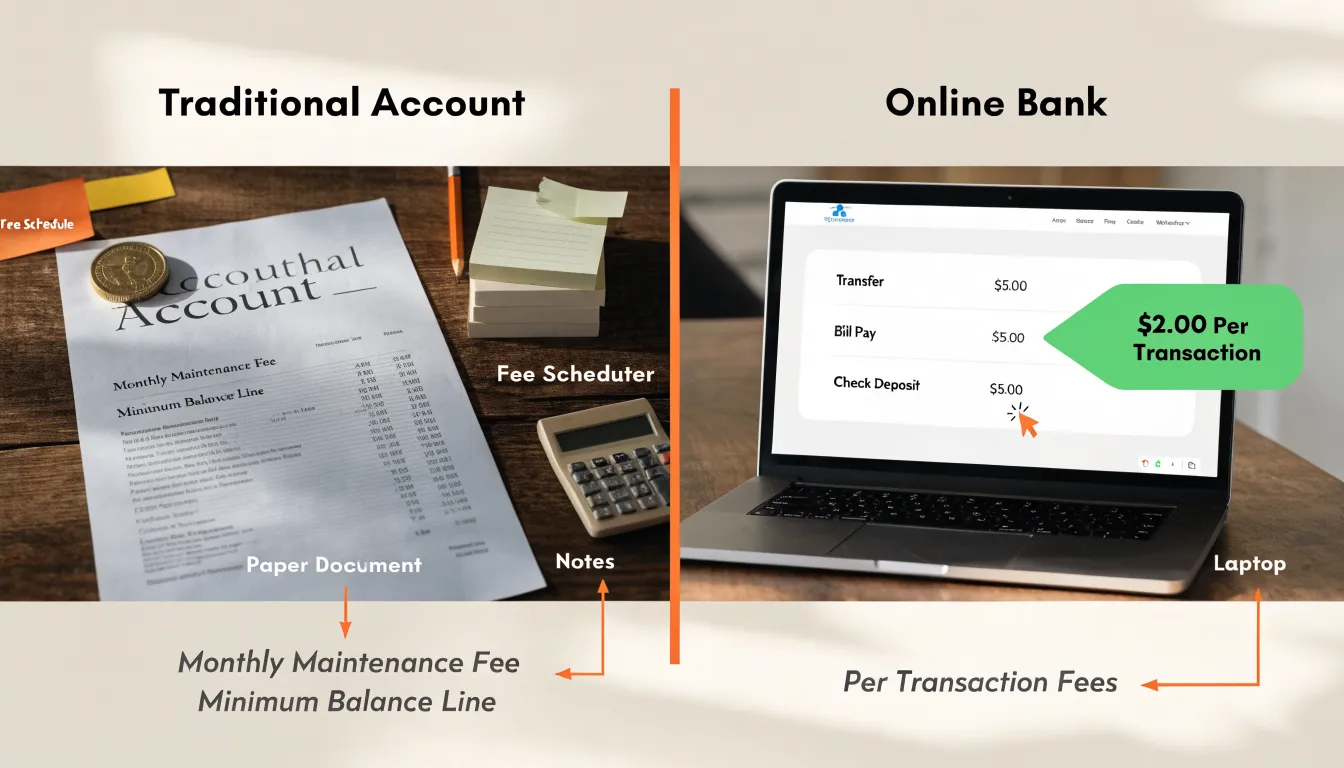
When comparing online and traditional business banking, the headline monthly fee or the promise of no monthly maintenance can be misleading. A closer look at the fee structures reveals that costs often shift rather than disappear. Traditional banks typically impose a monthly maintenance fee that can range from $10 to $30 or more, and this fee is frequently waived only if the business maintains a minimum average daily balance—often $2,500 to $10,000 for small business accounts. Falling below that threshold triggers the fee automatically, making it a recurring cost for businesses with fluctuating cash flow. In addition, traditional banks may charge for paper statements, teller-assisted transactions beyond a set limit, and returned items. These fees are predictable in timing but can add up quietly month after month.
Online banks often advertise no monthly maintenance fees and no minimum balance requirements, which appeals to businesses seeking simplicity. However, the cost structure shifts to transactional charges. Per-transaction fees may apply for exceeding a certain number of monthly transfers, for using out-of-network ATMs (often $2 to $5 per withdrawal plus a possible surcharge from the ATM operator), and for services like wire transfers or cash deposits. Some online banks also charge for paper checks or for depositing cash through third-party networks. For a business that handles frequent cash deposits or relies on ATM withdrawals, these per-transaction fees can quickly surpass the monthly fee of a traditional account. Conversely, a business that operates mostly digitally and rarely uses cash may find online banking far cheaper. The key is to map your actual transaction patterns—how often you deposit cash, write checks, send wires, or use ATMs—against each bank’s fee schedule. Overlooking these hidden costs can turn an apparently free account into an expensive one, while a traditional account’s fees may be avoidable with careful balance management. Understanding the full fee landscape ensures you compare total cost of ownership, not just the most visible charges.
How do security measures and fraud protections compare across both options
Security is a central concern for any business managing its finances, and the comparison between online and traditional banks begins with foundational protections. Both online-only banks and traditional brick-and-mortar institutions typically provide FDIC insurance on eligible deposits, up to the standard limit of $250,000 per depositor, per bank, per ownership category. This coverage extends to business accounts, giving owners peace of mind that their funds are backed by the federal government. Beyond insurance, both types of banks have adopted robust digital security measures, including two-factor authentication (2FA) for online access. Whether you log in through a mobile app or a web portal, you can expect to encounter 2FA prompts, such as a code sent to your phone or a biometric scan, adding an extra layer of protection against unauthorized access. Fraud monitoring systems are also standard across the industry. Banks use algorithms to flag unusual transactions, such as large transfers to unfamiliar recipients or activity from unexpected locations, and may contact you to verify legitimacy. In these core areas, the protections are largely equivalent.
Differences emerge in the speed and style of response when fraud is suspected or when you need support. Traditional banks often have physical branches where you can speak with a representative face-to-face, which some business owners find reassuring for resolving complex issues. However, branch hours and wait times can delay assistance. Online banks, by contrast, typically offer extended customer service hours, including evenings and weekends, and may respond more quickly through chat or phone. Their digital-first model often means faster fraud alerts and the ability to freeze a compromised account instantly via an app. Yet, the lack of physical locations can be a drawback for those who prefer in-person help. Response times also vary by institution: some online banks pride themselves on near-instant support, while traditional banks may have more layered approval processes for fraud resolution. Ultimately, both options provide strong security foundations, but the choice may come down to how quickly and through which channels you prefer to receive support when issues arise.
Choosing the right fit based on your business model and payment habits
Choosing the right banking setup begins with an honest look at how your business actually operates day to day. Start by mapping your revenue streams: where money comes from, how quickly it arrives, and in what form. A business that invoices clients and receives payments by card, bank transfer, or payment platform has needs that differ sharply from a shop or service provider that handles physical cash every day. Once you understand those flows, matching them to a banking model becomes a practical exercise rather than a guess.
Digital-first businesses, such as e-commerce stores, consultancies, freelancers, and software companies, tend to thrive with online banks. Their income typically arrives electronically, so features like instant transaction notifications, integration with accounting software, automated categorisation of expenses, and low or zero monthly fees deliver real value. Online banks often excel at rapid onboarding and clean digital records, which suits owners who manage finances from a laptop or phone and rarely need to deposit cheques or coins.
Cash-heavy businesses, including cafes, market stalls, salons, and trades, face a different reality. Regular cash deposits, coin handling, and access to a physical branch or deposit point remain practical necessities. Traditional banks generally provide stronger infrastructure here, along with local relationship managers who understand seasonal cash flow patterns and can act quickly when a short-term buffer is needed.
Lending requirements also shape the decision. Businesses planning to borrow for equipment, premises, or expansion may find traditional banks better suited, since they often offer established credit assessment processes, overdraft facilities, and long-standing relationships that support larger loan applications. Online lenders have grown, yet a conventional banking relationship can still smooth the path for significant financing.
A hybrid approach works well for many owners: an online account for daily transactions and a traditional relationship for cash handling or credit. Weigh your payment mix, deposit frequency, and funding plans, then choose the combination that keeps money moving with minimal friction.
The hybrid approach
A hybrid approach to business banking combines the speed and convenience of an online account with the relationship-based services of a traditional bank. Many businesses now use an online-only account for day-to-day transactions—paying suppliers, receiving customer payments, and managing petty cash—while keeping a traditional account for lending, cash deposits, and other services that benefit from in-person support. This setup lets you take advantage of digital tools for routine tasks and rely on a established institution for more complex financial needs.
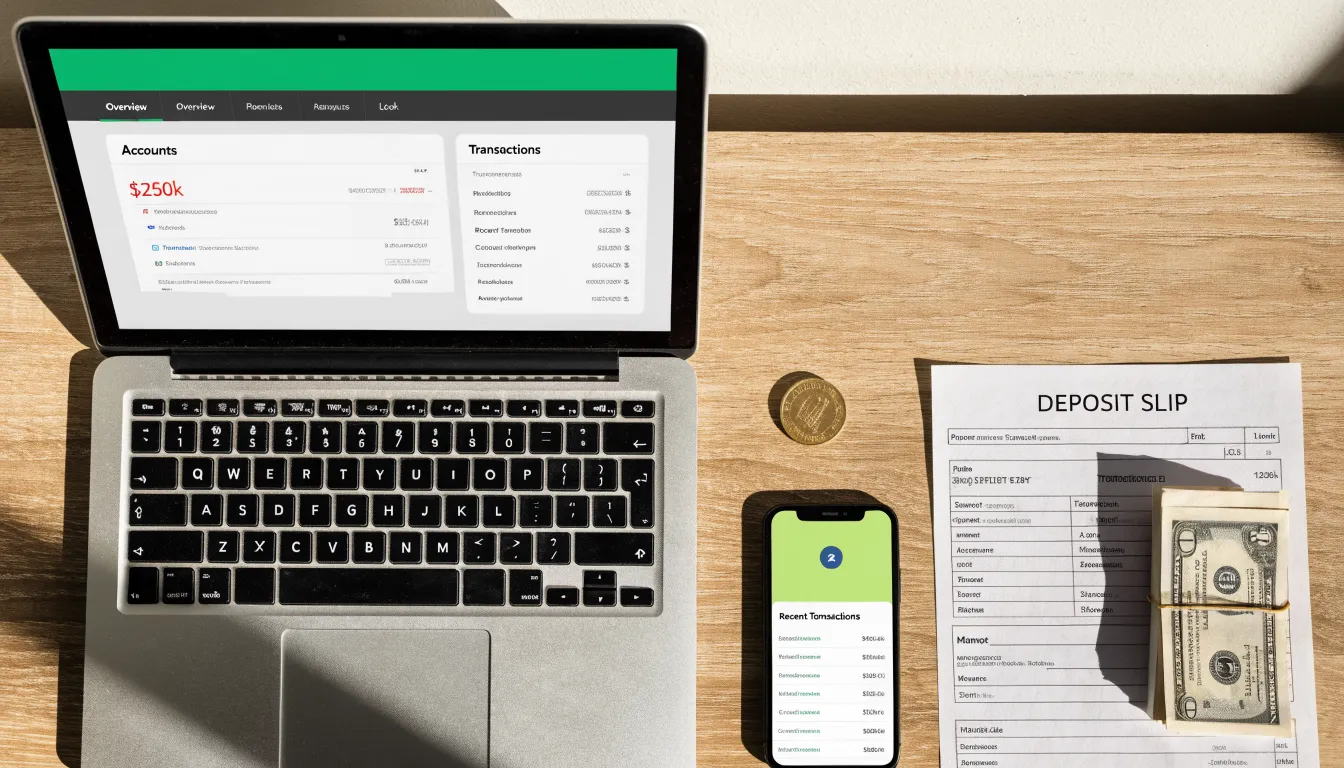
Online business accounts typically offer lower fees, real-time balance updates, and seamless integration with accounting software, making them ideal for high-volume, low-value transactions. Traditional banks, on the other hand, provide access to credit lines, equipment loans, and merchant cash services, along with the ability to deposit cash and cheques at a branch. By using both, you can streamline daily operations without sacrificing access to essential lending and cash-handling services.
Managing multiple accounts requires some organisation. Start by defining clear roles for each account: use the online account for operational expenses and the traditional account for loan repayments and cash deposits. Set up automatic transfers between accounts to cover recurring bills or to move surplus funds. Keep a simple spreadsheet or use accounting software to track balances across accounts, and reconcile them weekly to avoid discrepancies. Review your banking fees regularly to ensure the hybrid model remains cost-effective.
Security is another consideration. Use strong, unique passwords for each online account, enable two-factor authentication, and monitor transactions frequently. For the traditional account, take advantage of any alerts or fraud monitoring services your bank offers. Finally, maintain a good relationship with your traditional bank manager—they can provide valuable advice as your business grows and may offer better terms on lending products.
By thoughtfully combining online and traditional banking, you can enjoy digital agility for daily transactions and the stability of a traditional bank for lending and cash services, all while keeping your finances organised and secure.
Frequently Asked Questions
How do online and traditional business banks handle daily operations differently?
Online banks handle routine money movement inside an app, including mobile check deposit, scheduled payments, and real-time balance visibility. Traditional banks structure daily operations around the branch and relationship manager, with teller or ATM deposits and face-to-face escalation for issues.
What are the advantages of online business banking for remote teams?
Online banks often have no monthly fees, digital account opening that can be approved within days or hours, integrations with accounting software, and 24/7 access from anywhere. These features support remote teams and lean operations by reducing administrative effort and the need to visit a branch during banking hours.
Can online-only business accounts handle cash deposits?
Many online-only business accounts do not accept cash deposits at all, or they require third-party ATM networks that may charge fees and have low deposit limits. For cash-heavy businesses, this can mean keeping a separate traditional account or making frequent trips to a physical branch.
Are traditional banks better for business loans and relationship lending?
Traditional brick-and-mortar banks maintain an advantage in relationship lending because local bankers can assess local market conditions and customize terms beyond standardized algorithms and credit scoring. This can help small businesses seeking customized financing or flexible terms.
What hidden fees should I watch for with online vs traditional business banking?
Traditional banks may charge monthly maintenance fees of $10 to $30 or more unless a minimum average daily balance is maintained, while online banks may charge per-transaction fees for extra transfers, out-of-network ATMs, wires, or cash deposits. The article advises mapping your actual transaction patterns against each bank’s fee schedule.
How do security and fraud protections compare between online and traditional business banks?
Both typically provide FDIC insurance on eligible deposits up to $250,000 per depositor, per bank, per ownership category, plus two-factor authentication and fraud monitoring. Traditional banks offer in-person support, while online banks often offer extended service hours and the ability to freeze a compromised account instantly via an app.