Revenue vs Profit
Revenue is the total money a business brings in from sales before any costs are subtracted, while profit is what remains after all expenses are paid. Revenue sits at the top of the income statement and sets the ceiling on earnings; profit, the bottom line, shows whether the business actually makes money.
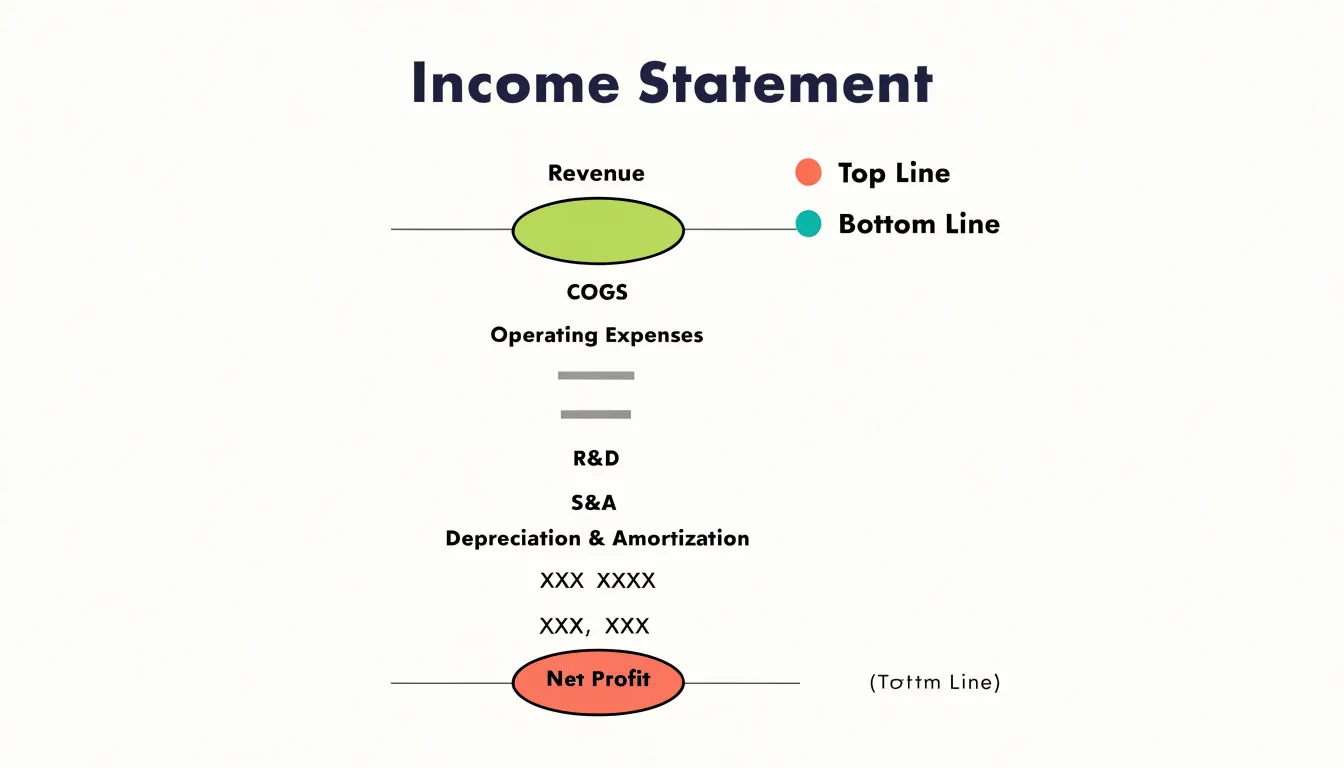
Table of Contents
- Understanding the money that enters your business through sales
- Calculating bottom line profit after all expenses are paid
- Gross profit versus net profit
- Why high sales numbers can mask dangerous cash flow problems
- Operating expenses that quietly drain your daily business earnings
- The growth trap
- How small low revenue businesses can outperform massive competitors
- Actionable strategies to protect your profit margins while scaling
Understanding the money that enters your business through sales
Revenue represents the total amount of money a business brings in through its sales activities over a given period, before any costs or expenses are subtracted. For a retail shop, it is the sum of everything rung up at the register. For a software company, it is the subscription fees collected from customers. For a manufacturer, it is the wholesale value of goods shipped and invoiced. This incoming money is the starting point of every financial statement, which is why revenue is commonly called the ‘top line’ — it appears at the very top of the income statement, and every other figure below it, from expenses to taxes to net profit, flows from that initial number.
Within revenue, two distinct measures are worth understanding. Gross revenue is the full amount invoiced to customers before any deductions. Net revenue is what remains after certain items are subtracted, typically returns, allowances for damaged or discounted goods, and sometimes sales taxes collected on behalf of a government. A clothing retailer might record $500,000 in gross revenue for the year but, after processing $40,000 in customer returns and $10,000 in markdown allowances, report $450,000 in net revenue. Net revenue generally offers a more accurate picture of what the business actually keeps from its selling activity.
Two levers drive the size of the top line: sales volume and pricing. Volume refers to the number of units sold or the number of transactions completed, while pricing is the amount charged per unit or per contract. A café selling 400 coffees a day at $3 each generates $1,200 daily; raising the price to $3.50 at the same volume lifts that to $1,400, and selling 450 cups at $3 raises it to $1,350. In practice, these levers interact — higher prices may reduce volume, and promotions may boost volume at the cost of margin — so businesses watch both closely when forecasting revenue.
The ‘top line’ label also carries practical weight. Revenue growth is the figure analysts, investors, and lenders examine first to gauge a company’s market traction and scale, and it sets the ceiling on what a business can ultimately earn. A company can only generate so much profit from a given revenue base, which makes understanding where that money comes from — and how it is measured — fundamental to reading any set of financial statements.
Calculating bottom line profit after all expenses are paid
Bottom-line profit is the figure that remains after every cost of running the business has been accounted for, and arriving at it requires working through the income statement in a deliberate sequence. The calculation begins with total revenue, the money brought in from sales of goods or services before any deductions. From that starting point, subtract the cost of goods sold, which captures the direct expenses tied to producing what the business sells, such as raw materials, manufacturing labor, and freight. Revenue minus COGS yields gross profit, a measure of how efficiently the core offering is produced and priced.
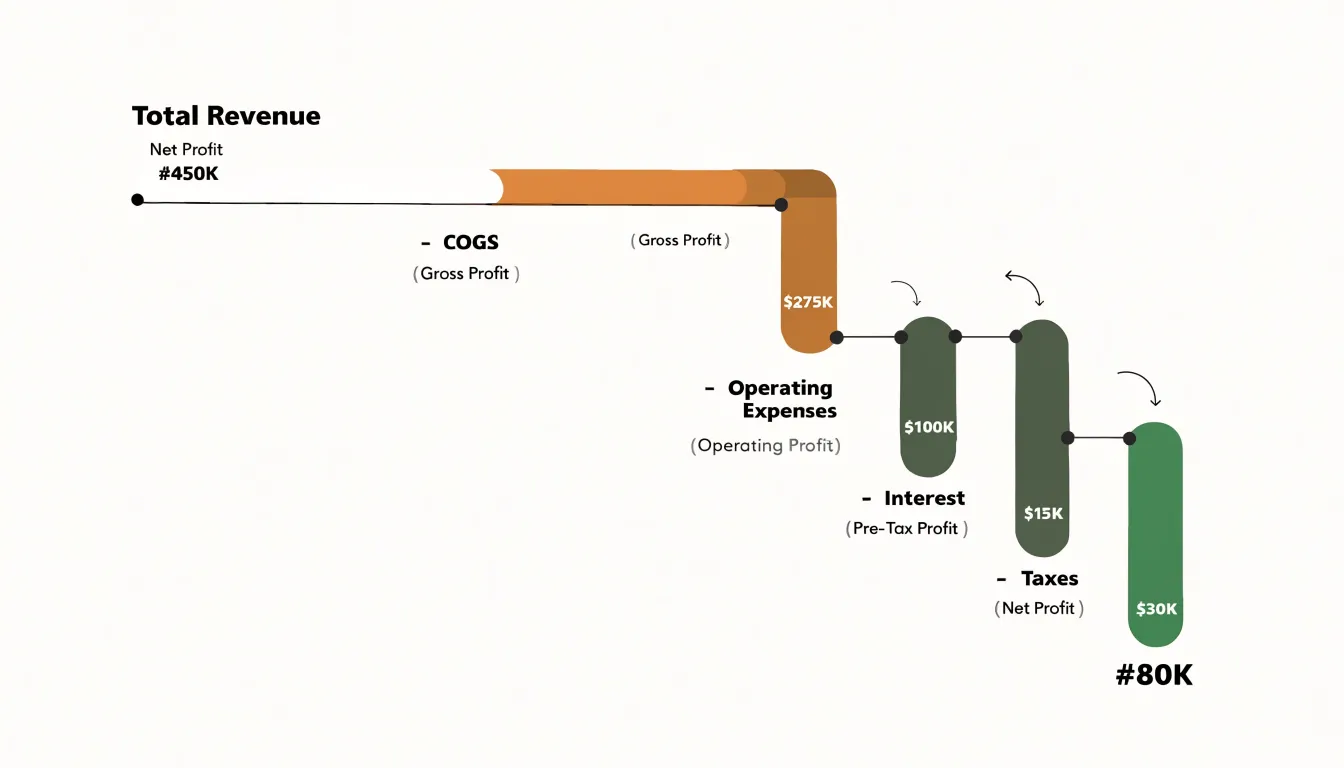
The next stage deducts operating expenses, the ongoing costs of keeping the business functioning. These include rent, utilities, salaries for administrative staff, marketing, insurance, and depreciation on equipment. Subtracting operating expenses from gross profit produces operating profit, also called operating income, which shows whether the core operations are generating money before financing and tax considerations enter the picture. From there, subtract interest paid on loans and other debt obligations to arrive at pre-tax profit, then apply the applicable corporate tax rate to reach net profit, the final bottom line.
What this final number reveals is the business’s fundamental viability. Net profit shows whether the enterprise is actually making money after all claims on its revenue have been settled, and it is the pool from which owners draw distributions, lenders are repaid principal, and future investment is funded. A consistently positive net profit indicates a sustainable operation capable of weathering downturns and financing growth internally. Persistent negative net profit signals that the business model is consuming more value than it creates, and that corrective action or additional capital will eventually be required. Because the figure is expressed in absolute dollars, it is also useful to compare against revenue as a net profit margin, revealing how much of each dollar of sales the business ultimately keeps. Tracking this calculation period over period gives owners and investors a clear picture of whether profitability is improving, holding steady, or eroding.
Gross profit versus net profit
Gross profit and net profit sit at different points along the income statement, and each one answers a distinct question about how a business is performing. Gross profit is calculated by subtracting the cost of goods sold from revenue. COGS covers the direct costs tied to producing or delivering what the company sells, such as raw materials, manufacturing labor, freight, and packaging for a product business, or payment processing and hosting for a subscription service. The resulting figure shows how much money remains to cover everything else the company does, which makes it a useful first check on pricing. If gross profit is thin, prices may be set too low relative to direct costs, or procurement and production may be leaking money. A healthy gross margin signals that the core offering carries enough markup to fund the rest of the operation.
Net profit goes further down the statement. It starts from gross profit and subtracts every remaining expense: sales and marketing, salaries for administrative staff, rent, utilities, software subscriptions, depreciation, interest on debt, and taxes. What is left is the bottom line, the amount the business actually earns over a period. Net profit reveals whether the entire operation is sustainable once overhead and financing costs are accounted for. A company can post strong gross profit and still record a net loss if operating expenses or interest obligations overwhelm the margin.
The two metrics also live in different places across the financial statements. Gross profit appears on the income statement directly beneath revenue and COGS, and it feeds into the gross margin ratio that analysts use for comparisons across periods and against competitors. Net profit appears at the bottom of the income statement and then flows into the balance sheet through retained earnings, increasing the equity section when the company is profitable and reducing it when losses accumulate. On the cash flow statement, net profit is the starting point for the indirect method of reconciling cash movements.
Reading the two together gives a fuller picture. Gross profit isolates the economics of the product or service itself, while net profit captures the combined effect of pricing, direct costs, overhead discipline, and capital structure. Tracking both over time shows whether margin pressure comes from production or from the cost of running the business.
Why high sales numbers can mask dangerous cash flow problems
A company can post impressive sales figures and still find itself unable to cover payroll or rent when those obligations come due. The reason lies in the gap between when revenue is recorded and when cash actually arrives. Accounting rules generally count a sale when goods or services are delivered, even if the customer has thirty, sixty, or ninety days to pay. During that interval, the business records revenue on its income statement while its bank account holds nothing new. If obligations to suppliers, landlords, and employees fall due before the customer pays, the company faces a shortfall despite a healthy-looking top line.
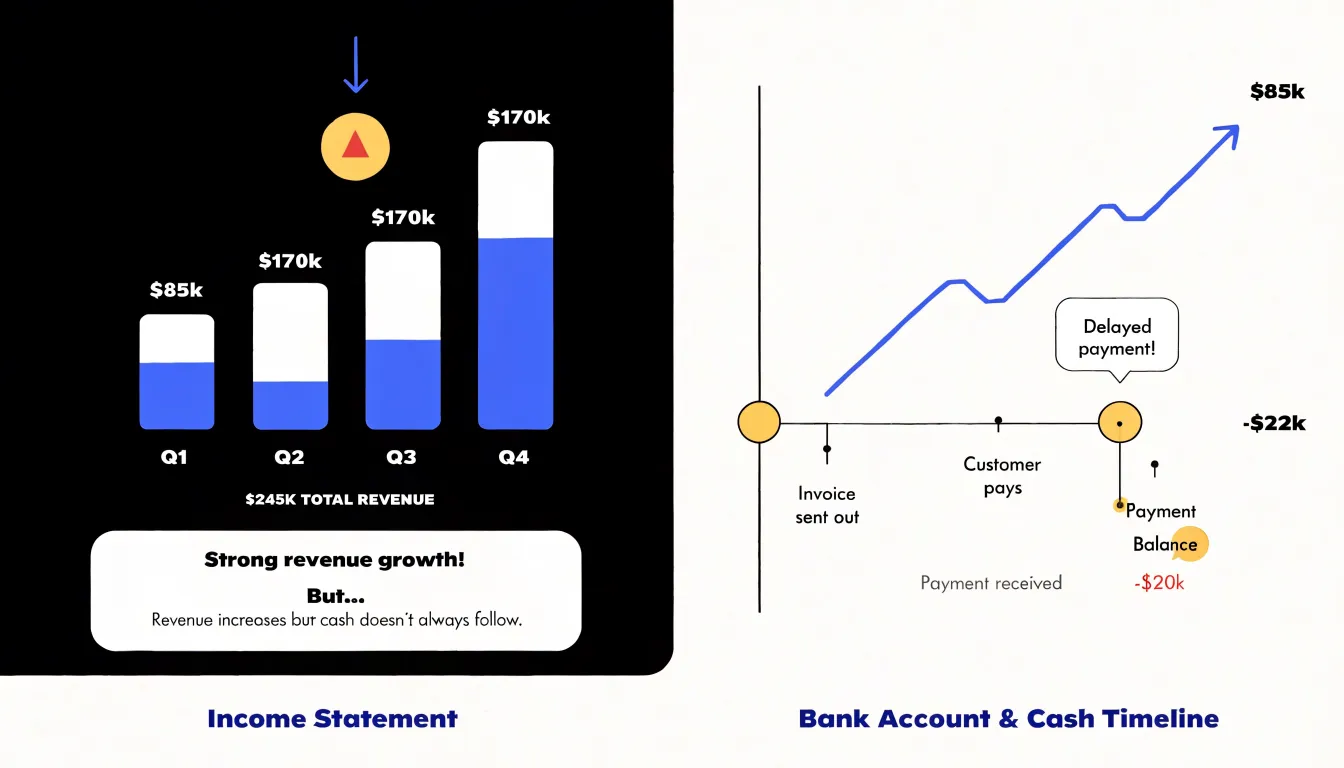
Unpaid invoices amplify this problem. A growing pile of receivables can represent real sales and real earned revenue, yet none of it is spendable until collection occurs. Slow-paying or delinquent customers turn reported revenue into a ledger entry rather than available funds. Businesses that extend generous payment terms to win deals can find themselves financing their customers’ operations, effectively lending cash they may need for their own expenses.
Thin margins add another layer of risk. When each sale contributes only a small surplus over its direct costs, the company must generate substantial volume simply to cover fixed overhead. A high revenue figure achieved on narrow margins leaves little cushion, and a modest dip in volume or an unexpected cost can push the operation into a cash deficit. Revenue growth itself often consumes cash: expanding inventory, hiring staff, and ramping up marketing all require outlays before the resulting sales convert into collected payments. A fast-growing business can therefore be more cash-strapped than a stable one.
Cash flow management is a distinct discipline from revenue growth. It involves forecasting the timing of inflows and outflows, monitoring receivables and collection cycles, negotiating payment terms with suppliers, maintaining reserves, and planning for seasonal or cyclical swings. Revenue growth measures market demand and sales effectiveness; cash flow management measures whether the business can meet its obligations as they arise. A company can be excellent at the first and careless with the second. Tracking both separately gives leadership an accurate picture of financial health, and it prevents the false comfort that strong sales numbers can create.
Operating expenses that quietly drain your daily business earnings
Every business carries a set of ongoing costs that come due whether or not a single sale is made that day. Rent falls due at the first of the month. The utility bill arrives on schedule. Payroll must be met on every payday. Marketing spend continues in the hope of generating future revenue. Software subscriptions renew automatically, often without anyone reviewing them. These operating expenses are the steady, everyday outflows that sit between the money coming in and the profit that remains. Individually they can look modest; collectively they shape whether a business ends the year with a surplus or a shortfall.
The challenge is that many of these costs are invisible in daily operations. A monthly software charge of a few dozen dollars barely registers on a bank statement, yet a dozen such subscriptions can add up to thousands over a year. Utility costs creep upward with rate increases that go unnoticed. Marketing budgets grow by habit rather than by measured return. Payroll expands through small additions that are never re-examined against the revenue each role produces. Taken one at a time, none of these items seems urgent; taken together, they steadily eat into the margin a business works hard to earn.
Identifying hidden costs begins with a full accounting of every recurring outflow. A careful review of bank and credit card statements over several months will usually surface forgotten subscriptions, duplicate tools, and services that no longer serve a purpose. Comparing utility and insurance costs against market rates can reveal overspending that has simply become routine. Marketing spend deserves scrutiny tied to results, since channels that once performed well can fade quietly.
Trimming begins with the easy wins: cancelling unused subscriptions, consolidating overlapping tools, renegotiating contracts at renewal time, and setting spending approvals for new recurring charges. Deeper savings come from regular review cycles, where each expense is measured against the value it delivers. Businesses that treat operating expenses as a living budget rather than a fixed set of obligations keep more of what they earn and protect the profit that funds their growth.
The growth trap
Rapid sales growth is almost universally treated as a sign of health, yet growth places intense demands on a company’s working capital. Every additional unit sold requires cash outlays before the money comes back in: inventory must be purchased and produced, staff must be hired and paid, and receivables sit outstanding for weeks or months. When sales climb steeply, these outflows arrive faster and larger than the inflows they eventually generate. A business that doubles its revenue may need to double its inventory and its payroll long before customers settle their invoices, and that gap has to be bridged with cash the company may not have. This is the growth trap: a firm can be profitable on paper and simultaneously run out of money in the bank.
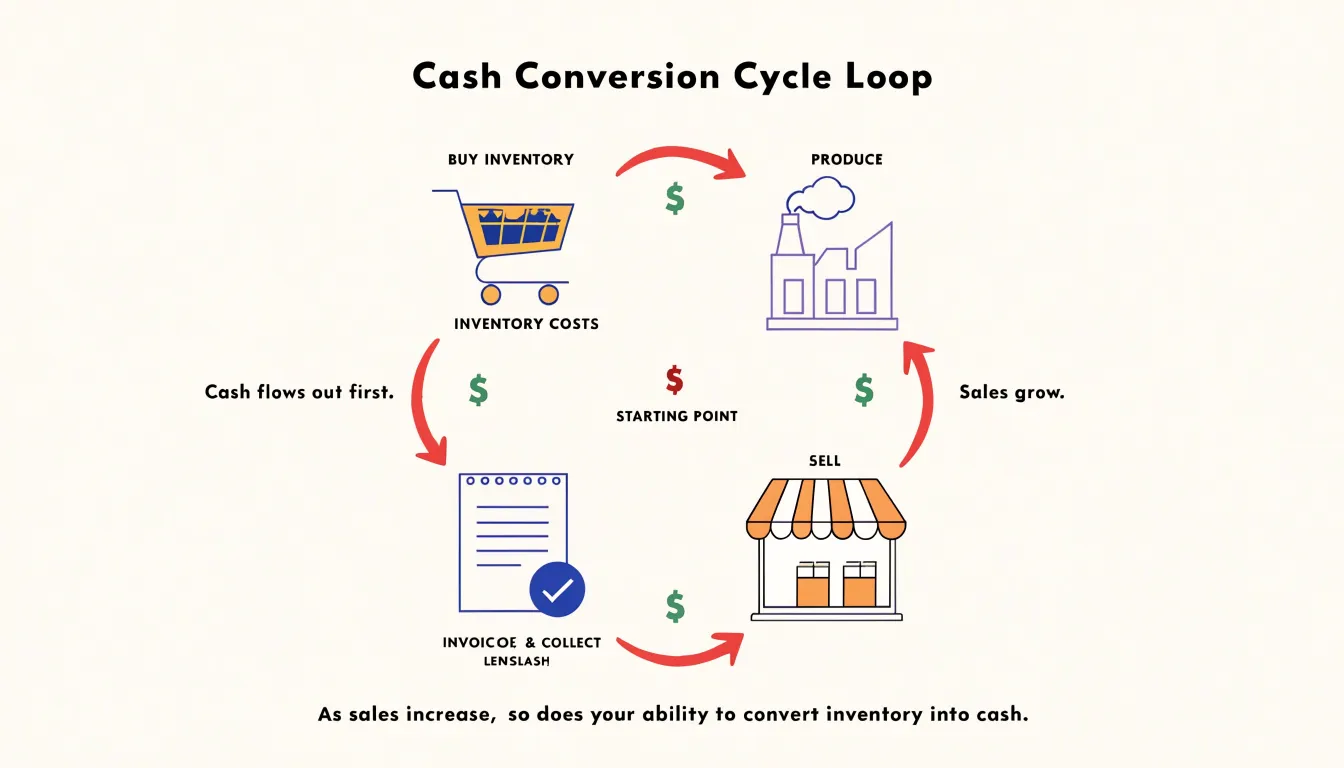
Fixed costs compound the problem. Growth usually requires larger premises, additional equipment, more administrative staff, and investment in systems and distribution. These commitments are incurred in advance of the sales they are meant to support, and many of them cannot be quickly reversed if demand softens. A company that expands its warehouse and hires a larger team to handle a surge in orders has locked in higher monthly obligations regardless of what happens next quarter. The result is a business with a rising revenue line and a shrinking cash cushion.
History offers repeated illustrations. Retailers and consumer brands have grown explosively on the back of strong demand only to collapse when the working capital required to fund inventory and receivables outran their access to credit. Construction and manufacturing firms have taken on larger contracts, financed materials and labor upfront, and then failed when a customer paid late or a lender tightened terms. In each case, the revenue was real and the demand was genuine; the failure came from the cash timing underneath the sales.
The lesson for operators is to treat growth as a financing decision as much as a sales decision. Monitoring the cash conversion cycle, negotiating supplier terms, securing adequate credit lines, and pacing expansion to the cash the business can actually generate all help ensure that rising revenue strengthens the company rather than draining it. Growth is only valuable when the business can afford to carry it.
How small low revenue businesses can outperform massive competitors
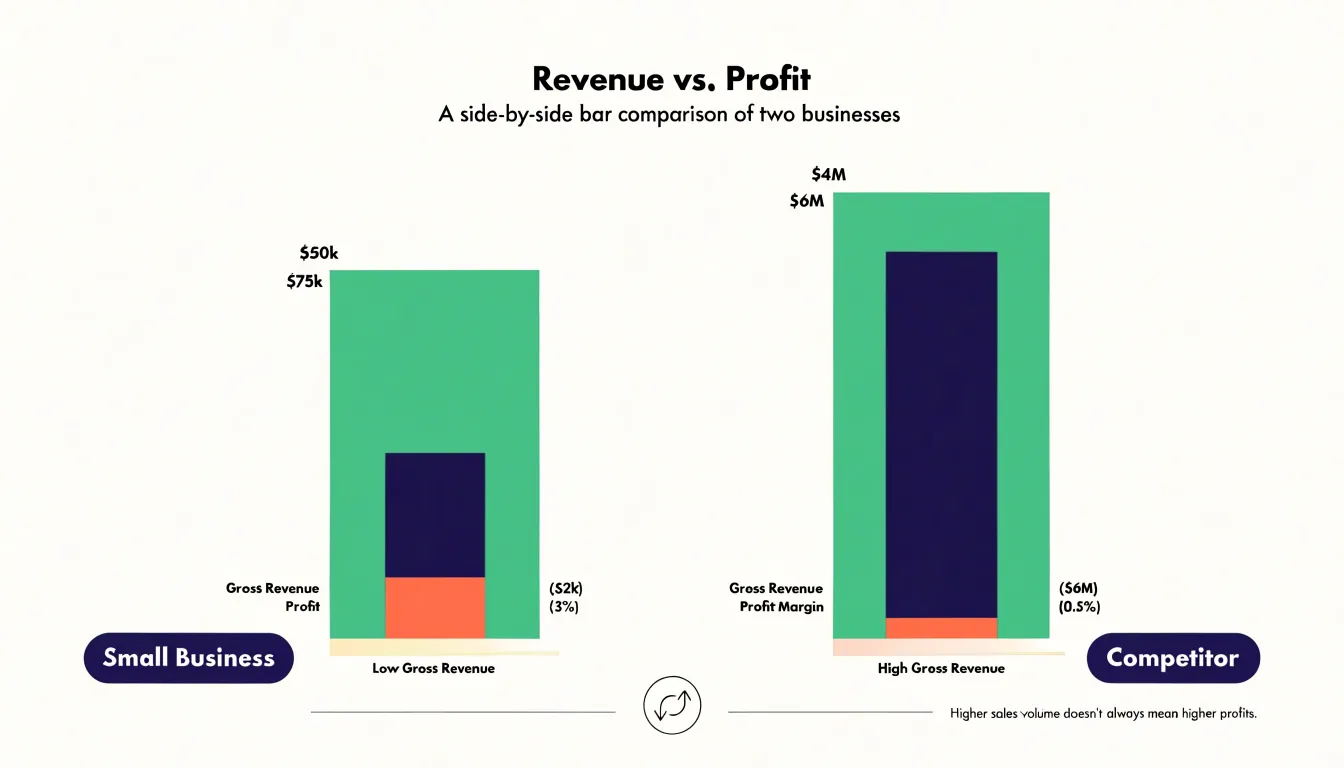
Small businesses with modest revenue often achieve profitability that rivals or exceeds much larger competitors. The key lies in the distinction between revenue and profit: revenue measures total sales, while profit is what remains after all costs. A small business can generate strong profits by maintaining low overhead, focusing on high-margin products or services, and operating efficiently. This lean approach allows small businesses to thrive even when their total sales are a fraction of those of industry giants. For instance, a specialized consulting firm with a handful of clients can charge premium fees for expert advice, keeping costs minimal and margins high. Similarly, a niche e-commerce store selling unique handcrafted goods may have limited revenue but strong profits due to low production costs and a loyal customer base willing to pay a premium. Another example is a local software company that develops a specialized tool for a specific industry, charging a subscription fee that yields high margins because the development costs are fixed and the customer base is stable. In contrast, large competitors often have sprawling operations, significant overhead, and thinner margins due to price competition and economies of scale that prioritize volume over profitability. By staying lean and focusing on profitability rather than revenue growth, small businesses can outperform massive competitors in terms of financial health and sustainability. This approach also provides resilience during economic downturns, as lower fixed costs make it easier to adapt. Ultimately, the success of a business is not determined by its size or revenue alone, but by its ability to generate consistent profits and maintain a competitive edge through efficiency and specialization.
Actionable strategies to protect your profit margins while scaling
Protecting profit margins while scaling requires deliberate action across several fronts. Pricing optimization is a powerful lever: regularly review your pricing against the value you deliver, and consider tiered or value-based models that capture more from customers who gain the most. Small increases, communicated well, can significantly boost margins without sacrificing volume. Equally important is cost control. As you grow, costs can creep in through new hires, software subscriptions, and overhead. Implement a system to track every expense and regularly audit for waste. Negotiate harder with existing vendors and consolidate purchases to unlock volume discounts. Renegotiating supplier terms is another practical tactic. If you have a strong payment history or are increasing order volumes, ask for better rates, extended payment windows, or rebates. Even a few percentage points saved on materials or services can flow directly to your bottom line. Improving cash flow cycles ensures you have the liquidity to operate efficiently. Invoice promptly, offer early payment discounts, and follow up on overdue accounts. On the payables side, negotiate longer terms with suppliers without damaging relationships. This reduces the need for expensive short-term financing and keeps more cash available for growth initiatives. Finally, adopt profit-first budgeting. This means setting aside a target profit percentage before allocating funds to expenses. By treating profit as a non-negotiable line item, you avoid the trap of spending everything you earn and ensure that growth is funded from a position of strength. Combined, these strategies create a resilient financial foundation that allows you to scale without sacrificing the margins that sustain your business.
Frequently Asked Questions
What is the difference between revenue and profit?
Revenue is the total money a business brings in through sales before any costs or expenses are subtracted, while profit is what remains after all costs have been accounted for. Revenue is the “top line,” and bottom-line profit is what the business actually earns after expenses are paid.
How do you calculate net profit?
Start with total revenue, subtract cost of goods sold to get gross profit, subtract operating expenses to get operating profit, subtract interest to reach pre-tax profit, then apply the corporate tax rate. Net profit is the final bottom line.
What is the difference between gross profit and net profit?
Gross profit is revenue minus the cost of goods sold, showing how efficiently the core offering is produced and priced. Net profit subtracts all remaining expenses, including operating costs, interest, and taxes, and shows what the business actually earns over a period.
Why can high sales numbers hide cash flow problems?
A sale can be recorded as revenue when goods or services are delivered even if the customer has 30, 60, or 90 days to pay, so the business may have revenue on its income statement without new cash in the bank. Unpaid invoices, thin margins, and growth-related outlays can leave a company unable to cover obligations despite healthy-looking sales.
What is the growth trap?
The growth trap is when rapid sales growth requires cash outlays for inventory, staff, and receivables before customer payments come in, so a business can be profitable on paper and still run out of money. Fixed costs from larger premises, equipment, and staff can compound the problem.
How can a business protect profit margins while scaling?
The article recommends reviewing pricing against value delivered, controlling and auditing costs, negotiating better supplier terms, improving cash flow cycles, and using profit-first budgeting. These steps help fund growth without sacrificing the margins that sustain the business.